
TL;DR:
- Foreign exchange is the conversion of one currency into another through the global forex market, which processes $9.6 trillion daily trades. The decentralized, 24-hour market is primarily driven by banks, governments, and corporations, with retail traders representing a small fraction. Understanding market structure, participants, and influencing factors helps traders manage risks in this volatile financial arena.
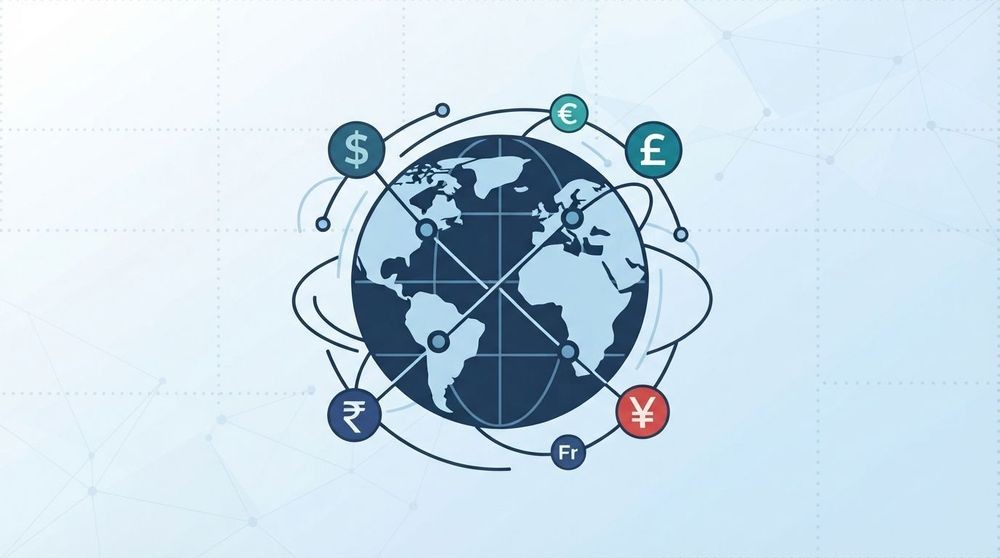
Foreign exchange is defined as the conversion of one currency into another through a global, decentralized market known as the forex market. This market is the largest financial market in the world, with a daily turnover of $9.6 trillion recorded in april 2025 by the Bank for International Settlements. That figure represents a 28% increase since 2022, which tells you this market is growing fast and touching more of the global economy every year. Whether you are a student curious about global finance, a traveler exchanging dollars for euros, or a novice investor exploring currency trading, understanding forex basics is a practical skill with real-world value.
What is foreign exchange and how does the market work?
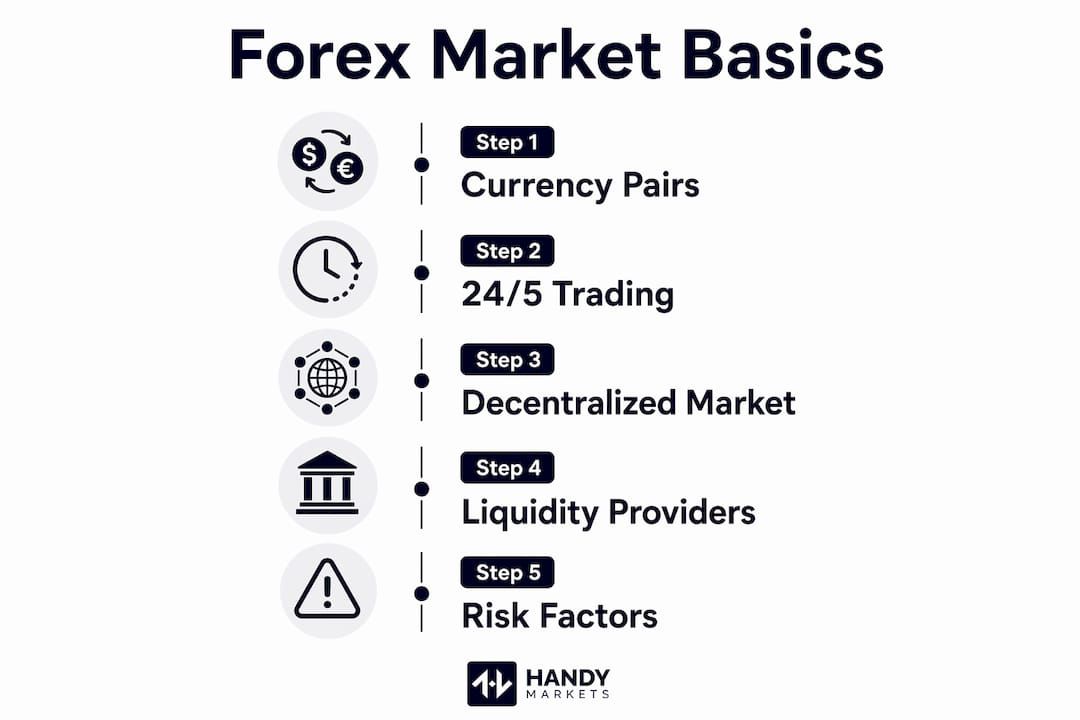
The forex market is an over-the-counter, decentralized market with no central exchange or clearing house. That structure differs from stock markets, where trades flow through a single exchange like the NYSE. Instead, forex trading happens directly between participants across a global network of banks, brokers, and financial institutions.

The market operates 24 hours a day, five days a week. Trading activity shifts between major financial centers as time zones rotate: Sydney opens first, followed by Tokyo, then London, and finally New York. The United Kingdom alone accounts for 37.8% of total daily forex volume, making London the undisputed center of global currency trading. The United States follows at 18.6%, with Singapore at 11.8% and Hong Kong at 7.0%.
Currencies always trade in pairs. A currency pair like EUR/USD expresses how much of one currency you need to buy one unit of another. The market sets relative prices, not absolute currency values. So when you see EUR/USD at 1.10, it means one euro buys $1.10. The three main instruments used in forex are spot trades, forwards, and swaps. Of the $9.6 trillion daily volume, $3 trillion comes from spot trades and $6.6 trillion from forwards, swaps, and derivatives.
Pro Tip: The London and New York trading sessions overlap between 8:00 AM and 12:00 PM Eastern Time. This window produces the highest daily liquidity and the tightest spreads, making it the most active period for currency trading.
Who participates in the forex market and why?
The forex market is not dominated by individual traders. Major participants include banks, corporations, governments, central banks, and retail traders, with institutions and commercial entities driving the vast majority of volume. Retail traders represent a very small fraction of that $9.6 trillion daily figure.
Each participant enters the market for a different reason:
- Central banks manage national currency values and implement monetary policy. The U.S. Federal Reserve and the European Central Bank both intervene in currency markets to stabilize their economies.
- Commercial banks provide liquidity to the entire market. They trade on behalf of clients and for their own accounts, forming the backbone of the interbank market.
- Corporations use forex to hedge against currency risk. A U.S. company that sells products in Europe needs euros. It uses the forex market to convert revenue and protect profit margins from exchange rate swings.
- Retail traders and travelers exchange currency for personal use or speculative purposes. A tourist converting dollars to Japanese yen at an airport booth is participating in the forex market, just at a much smaller scale.
Forex trading primarily serves international commerce, liquidity provision, and risk management. Speculation is a secondary use, not the market’s core purpose. This distinction matters because it shapes realistic expectations for anyone thinking about currency trading as an investment activity.
When you exchange currency at a bank or travel booth, you pay a spread, which is the difference between the buy price and the sell price. That spread covers the dealer’s profit and transaction costs. Retail forex transactions always include spreads, and understanding this cost is the first step toward evaluating whether a trade makes financial sense.
What factors affect foreign exchange rates?
Exchange rates are not random. Factors influencing exchange rates include interest rates, inflation, economic indicators, geopolitical events, and central bank interventions. Each of these forces pushes currency values up or down by shifting supply and demand in the market.
Here is how the main drivers work:
- Interest rates. When a central bank raises interest rates, its currency typically strengthens. Higher rates attract foreign capital seeking better returns, increasing demand for that currency. The U.S. dollar often rises when the Federal Reserve signals rate hikes.
- Inflation. A country with lower inflation tends to see its currency appreciate over time. Stable purchasing power makes that currency more attractive to hold and trade.
- Economic data. Reports like GDP growth, employment figures, and manufacturing output signal the health of an economy. Strong data usually pushes a currency higher because it signals confidence in that country’s financial future.
- Geopolitical stability. Political uncertainty, elections, and conflicts create currency volatility. Investors move capital away from unstable regions, weakening those currencies in the process.
- Central bank intervention. Governments sometimes buy or sell their own currency to influence its value. Japan’s Ministry of Finance has intervened in yen markets multiple times to prevent excessive depreciation.
Pro Tip: Watch the economic calendar. Scheduled releases like U.S. Non-Farm Payrolls or European Central Bank rate decisions cause sharp, predictable price movements. Knowing when these events occur helps you avoid being caught off guard by sudden volatility.
Understanding how liquidity shifts across currencies during different sessions also matters. Spreads widen and price movements become less predictable during low-volume periods, particularly between the New York close and the Sydney open.
What are the practical uses and risks of foreign exchange?
Foreign exchange touches everyday life more than most people realize. The table below shows the most common practical uses alongside the risks each one carries.
| Use case | Practical benefit | Key risk |
|---|---|---|
| International trade | Companies pay suppliers in local currencies | Exchange rate swings reduce profit margins |
| Travel and tourism | Travelers convert home currency abroad | Airport spreads and fees reduce value |
| Investment and portfolio diversification | Investors hold foreign assets for returns | Currency depreciation can erase gains |
| Hedging | Corporations lock in future exchange rates | Hedging costs reduce overall returns |
| Speculative trading | Traders profit from rate movements | High volatility can produce rapid losses |
The forex market’s decentralized structure creates specific risks that beginners often underestimate:
- Volatility. Currency prices can move sharply within minutes after major economic announcements.
- Spread costs. Every trade carries a built-in cost. Frequent trading amplifies spread expenses quickly.
- Leverage risk. Many retail forex accounts offer high leverage, which magnifies both gains and losses.
- No central authority. Without a single regulator overseeing all transactions, execution quality varies by broker.
Novice traders often misunderstand forex as a consistent profit opportunity. The reality is that most market volume is institutional and commercial, not speculative. Retail traders compete against professional desks with superior technology, deeper liquidity access, and years of experience. Solid risk management in trading is not optional. It is the foundation of any sustainable approach to currency markets.
Key Takeaways
Foreign exchange is the world’s largest financial market, driven primarily by institutional and commercial activity rather than retail speculation, and understanding its structure is the first step toward participating wisely.
| Point | Details |
|---|---|
| Market scale | The forex market reached $9.6 trillion in daily turnover in april 2025, a 28% rise since 2022. |
| Decentralized structure | Forex operates OTC with no central exchange, running 24 hours a day across global financial centers. |
| Currency pairs | Currencies trade in pairs, with exchange rates reflecting relative value between two currencies. |
| Participants | Banks, corporations, and central banks dominate volume; retail traders represent a small fraction. |
| Risk awareness | Volatility, spreads, and leverage make risk management the most critical skill for any forex participant. |
The forex market is bigger than most beginners expect
At Handy Markets, we track forex rates alongside stocks, crypto, and commodities every day. One thing stands out clearly: the forex market behaves very differently from what most beginners expect when they first encounter it.
The $9.6 trillion daily volume sounds like an opportunity. In practice, the vast majority of that volume is institutional. Central banks, commercial banks, and multinational corporations are not trading for profit in the way a retail investor might imagine. They are managing real economic exposure. A German automaker converting U.S. dollar revenue back to euros is not speculating. It is running a business.
We have seen many beginners focus on short-term price movements without understanding what drives them. Interest rate decisions, inflation data, and geopolitical shifts move currencies far more reliably than chart patterns alone. The traders who build lasting knowledge start with macroeconomics, not just technical setups.
Most forex liquidity concentrates during session overlaps, particularly the London and New York overlap. Outside those windows, spreads widen and price action becomes choppy. Timing your activity around peak liquidity is one of the most underrated advantages a beginner can build early.
The honest advice is this: treat forex as a serious financial market, not a shortcut. Learn how financial markets work before placing a single trade. The market rewards preparation and punishes impatience.
Track forex rates and alerts with Handy Markets
Staying informed about currency movements is far easier when your market data is organized in one place.
Handy Markets aggregates live forex prices and alerts alongside stocks, cryptocurrencies, commodities, and indices, so you never have to switch between platforms to get the full picture. You can set up price alerts across Telegram, Discord, Slack, SMS, Webhook, and Email in minutes. When a currency pair hits a level you care about, you know immediately. For anyone building their understanding of global markets, having real-time data at your fingertips makes the difference between reacting and being ready.
FAQ
What is foreign exchange in simple terms?
Foreign exchange is the process of converting one currency into another. The global market where this happens is called the forex market, and it processes $9.6 trillion in daily trades.
How does the forex market operate?
The forex market is decentralized and runs over-the-counter, with no central exchange. It operates 24 hours a day, five days a week, across financial centers in London, New York, Tokyo, and Sydney.
What currencies are most traded in forex?
The U.S. dollar, euro, Japanese yen, British pound, and Swiss franc are among the most actively traded currencies. The EUR/USD pair is the most liquid currency pair in the world.
What is a spread in foreign exchange?
A spread is the difference between the buy price and the sell price of a currency pair. It represents the dealer’s profit and the transaction cost you pay on every trade.
Is forex trading suitable for beginners?
Forex trading carries significant risks, including volatility, leverage, and spread costs. Beginners should build a solid understanding of market fundamentals and risk management before trading with real capital.