
TL;DR:
- Tracking forex rates helps individuals and businesses avoid hidden markups and optimize currency transactions. Active traders benefit from detailed session and pair performance analysis to enhance profitability and manage risks effectively. Using real-time alerts and comprehensive monitoring tools, like Handy, ensures timely decisions and cost savings across all forex activities.
Tracking forex rates means monitoring the real-time value of one currency against another to make smarter exchange decisions, avoid hidden fees, and protect your profits. Foreign exchange, or forex, is the world’s largest financial market, and even a fraction of a percentage point in rate movement can translate into hundreds of dollars gained or lost. Whether you’re a traveler converting cash, a business paying overseas suppliers, or an active trader managing open positions, the importance of tracking forex cannot be overstated. Ignoring live rate data is not a neutral choice. It is a costly one.
Why track forex rates: the financial stakes are higher than you think
Currency exchange rates are not static numbers. They pulse constantly, shaped by central bank decisions, inflation data, geopolitical events, and market sentiment. The gap between the rate you see on a live mid-market feed and the rate your bank actually charges you is where money quietly disappears.
Banking apps show exchange rates with a 2–4% markup for major currencies like EUR/USD or GBP/USD, and up to 8% for exotic pairs like USD/TRY or USD/ZAR. That markup is not disclosed as a fee. It is baked silently into the rate itself, which means most people never realize they are paying it. A traveler exchanging $5,000 for a European trip at a 3% markup loses $150 before they even land.
The cumulative damage is significant. Travelers who do not track live mid-market exchange rates lose $150–$400 per trip due to avoidable FX markups and fees. That figure includes Dynamic Currency Conversion (DCC) charges at ATMs and point-of-sale terminals, where merchants offer to convert your purchase into your home currency at an inflated rate. A live mid-market rate on your phone takes seconds to check and immediately tells you whether you are being overcharged.
For businesses, the stakes scale with transaction volume. A company paying a $200,000 invoice to a European supplier at a 2% markup above mid-market loses $4,000 on a single transaction. Multiply that across quarterly payments and the annual cost of not monitoring currency exchange becomes a material budget line.
- Mid-market rate: The true midpoint between buy and sell prices, used as the benchmark for fair exchange
- Bank markup: The spread added above mid-market, typically 2–4% for major pairs
- DCC charge: A conversion fee applied at the point of sale, often 3–5% above mid-market
- ATM surcharge: A flat or percentage fee added by foreign ATM networks on top of the exchange rate
How does the forex market work across sessions?
The forex market operates 24 hours a day, five days a week, cycling through four major trading sessions: Sydney, Tokyo, London, and New York. Each session has its own liquidity profile, and rates move differently depending on which session is active. This is not a minor technical detail. It directly affects the price you get when you convert currency or execute a trade.
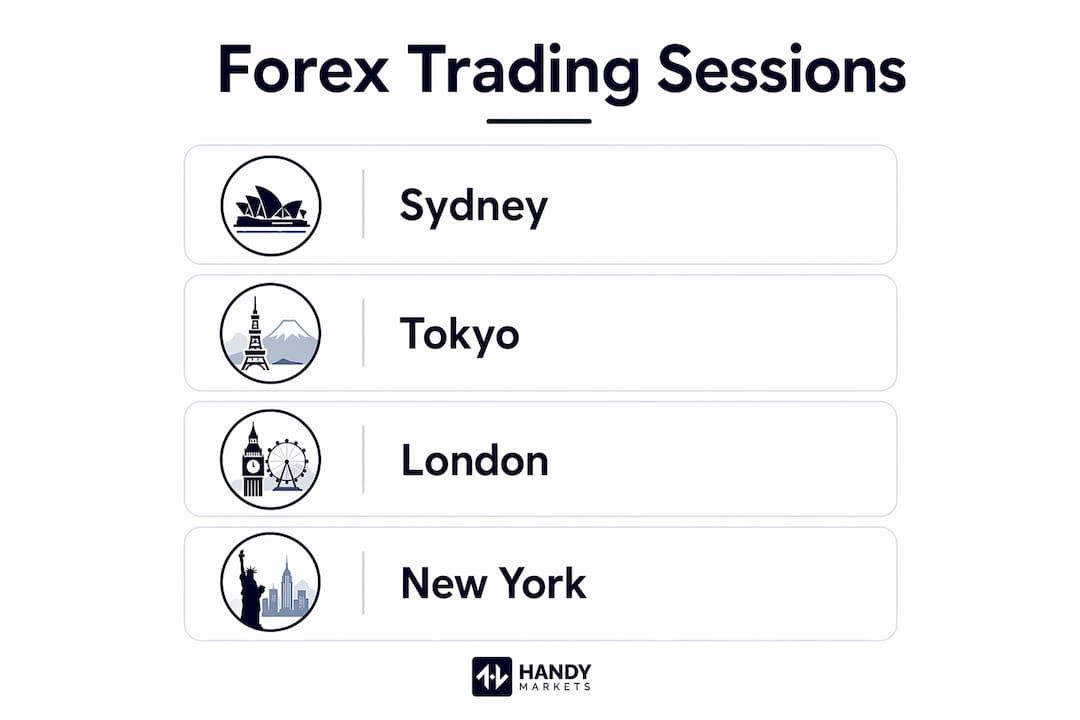
The London session, running roughly 3 a.m. to 12 p.m. EST, accounts for the largest share of daily forex volume. The New York session overlaps with London from 8 a.m. to 12 p.m. EST, creating the most liquid window of the trading day. During this overlap, spreads on major pairs like EUR/USD and GBP/USD tighten, meaning you get closer to the true mid-market rate. Converting currency or entering trades outside peak sessions, particularly during the Asian session for European pairs, often means wider spreads and less favorable rates.
Effective forex rate monitoring follows a two-step process. First, scan a live rate board for macro movements above 0.5%. A move of that size signals a meaningful shift worth acting on. Second, use a precise currency converter tool to calculate the exact dollar impact on your specific transaction. This two-step approach prevents both overreaction to noise and underreaction to genuine rate shifts.
- Open a live mid-market rate feed covering all pairs you care about
- Set a mental or automated threshold of 0.5% movement as your trigger for action
- Run the exact conversion amount through a mid-market calculator to see real dollar impact
- Compare that figure against your bank or app rate to quantify the markup
- Decide whether to transact now, wait, or use a specialist service
Pro Tip: Pin a live currency converter to your phone’s home screen. Checking it before any foreign transaction takes under 10 seconds and can save you more than the cost of a meal.
What do active traders gain from detailed rate tracking?
For active forex traders, monitoring rates goes far beyond knowing whether EUR/USD is up or down today. The benefits of monitoring currency rates at a granular level include understanding where your actual edge lives, which sessions produce your best results, and whether hidden costs are quietly eroding your profitability.
Most forex traders profit in only 2–3 currency pairs and lose money on others without tracking per-pair performance. This finding is counterintuitive to many traders who assume their strategy works uniformly across all pairs. It does not. EUR/USD and GBP/JPY behave very differently in terms of volatility, spread, and session sensitivity. Treating them identically in your tracking is a structural mistake.
Tracking both pip P&L and dollar P&L matters because pips measure trade quality while dollars measure actual account impact. A trade that earns 30 pips on a 0.1 lot position produces a very different dollar result than 30 pips on a 1.0 lot position. Ignoring either metric distorts your understanding of performance.
“Forex traders often incorrectly assume equal performance across sessions. Tagging sessions in your journal reveals hidden weaknesses and strengths that aggregate statistics completely mask.” — TradeZella, 2026
Failing to track spread and swap fees leads traders to underestimate real trading costs and profitability erosion. Swap fees, also called rollover fees, apply to positions held overnight. On a multi-day trade in a high-interest-rate differential pair, these fees can turn a winning position into a net loss. A trading journal that includes session tags, pip and dollar P&L, lot size, swap fees, and correlated currency exposure gives you the full picture.
Currency pair correlations add another layer of risk. EUR/USD and GBP/USD, for example, move in the same direction roughly 80–90% of the time. Holding simultaneous long positions in both pairs without tracking that correlation effectively doubles your directional exposure. Analyzing forex rate fluctuations across correlated pairs is not optional for serious traders. It is risk management.
Pro Tip: Log every trade with a session tag (London, New York, Asia, or Overlap). After 30 trades, sort by session and you will almost certainly find one session where your win rate drops below 40%. Cutting that session alone can improve your overall performance.
Practical strategies to monitor rates and cut costs
Turning rate awareness into consistent savings requires a system, not just occasional checks. The following framework applies whether you are a frequent traveler, a small business owner, or a part-time trader managing a few open positions.
For individuals, the core habit is comparing any bank or app rate against a live mid-market source before transacting. Tools that aggregate live exchange rates across dozens of currency pairs make this comparison instant. If the gap between what your bank offers and the mid-market rate exceeds 1.5%, a specialist money transfer service or a no-FX-fee card will almost always save you money.
For businesses, delayed or hourly forex data puts you at risk of missed pricing opportunities compared to competitors using real-time feeds. A company that prices international contracts using yesterday’s rates is essentially guessing. Real-time data allows you to lock in favorable rates, time supplier payments strategically, and set hedging triggers with confidence.
| Situation | Recommended approach |
|---|---|
| Traveling abroad | Check live mid-market rate before every conversion; decline DCC at ATMs |
| Paying overseas suppliers | Use real-time feed to time payments; compare specialist transfer services |
| Active forex trading | Journal every trade with session, pip P&L, dollar P&L, and swap costs |
| Multi-currency business | Set automated alerts for rate moves above your cost threshold |
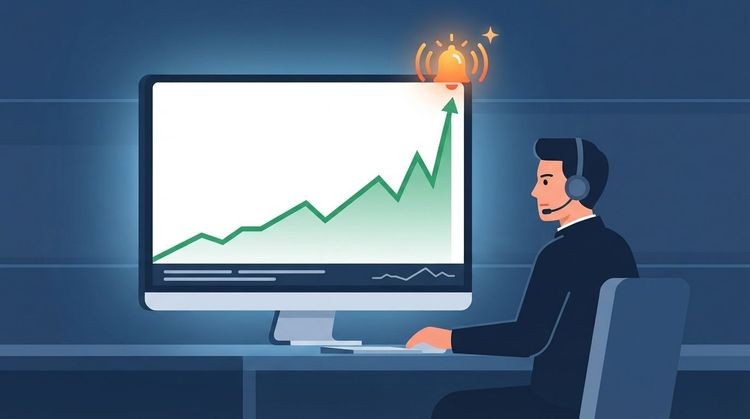
Real-time price alerts remove the need to watch screens constantly. Setting an alert for a specific rate level means you act when the market reaches your target, not when you happen to check. Platforms that deliver real-time notifications via Telegram, Slack, SMS, or email keep you connected to rate movements without demanding your full attention.
Pro Tip: For businesses managing recurring foreign payments, set a rate alert 0.5% above your budget rate. When the alert fires, that is your window to transact at a favorable level rather than waiting until the payment deadline.
Key takeaways
Tracking forex rates consistently is the single most effective way to reduce hidden currency costs and improve trading performance across both personal and business transactions.
| Point | Details |
|---|---|
| Hidden markups are the primary cost | Bank apps embed 2–4% markups in displayed rates, costing travelers $150–$400 per trip. |
| Session timing changes your rate | London/New York overlap offers the tightest spreads; transacting outside peak hours costs more. |
| Traders need pair-by-pair data | Most traders profit in only 2–3 pairs; tracking per-pair and per-session reveals your real edge. |
| Swap and spread fees erode profits | Untracked rollover fees on multi-day positions can turn winning trades into net losses. |
| Alerts replace constant monitoring | Automated rate alerts let you act at your target level without watching screens all day. |
The discipline gap most people never close
We have seen a consistent pattern at Handy: the traders and businesses that improve their financial outcomes fastest are not the ones with the most sophisticated strategies. They are the ones who track the most consistently.
The uncomfortable reality is that most people check forex rates reactively, after they have already committed to a transaction or entered a trade. At that point, the information is interesting but not useful. The value of rate tracking comes entirely from acting on it before you transact, not after.
We have also noticed that traders who journal their swap costs and session performance are often surprised by what they find. A strategy that looks profitable on aggregate frequently has one session or one pair dragging the entire result down. Without granular tracking, that drag stays invisible for months.
The tools available today make consistent monitoring genuinely easy. A live market data feed covering forex, commodities, and indices in one place removes the friction that used to make tracking feel like a chore. The discipline gap is no longer about access to information. It is about building the habit of using it before you need it.
Track smarter with Handy.Markets
Handy gives you live exchange rates for national currencies alongside real-time data for stocks, crypto, commodities, and indices, all in one place. You can track forex pairs across every major and minor currency, set custom rate alerts, and receive instant notifications through Telegram, Discord, Slack, SMS, Webhook, or Email. Setting up a price alert takes under a minute and means you never miss the rate level you have been waiting for. Whether you are timing a supplier payment, managing an open trade, or planning a trip abroad, Handy keeps the data you need within reach at all times.
FAQ
Why track forex rates if I only travel occasionally?
Even occasional travelers lose $150–$400 per trip to avoidable markups and DCC fees. Checking a live mid-market rate before converting currency takes seconds and can save you more than the cost of a hotel night.
What is the difference between the mid-market rate and my bank’s rate?
The mid-market rate is the true midpoint between buy and sell prices in the interbank market. Your bank’s displayed rate typically includes a 2–4% hidden markup that is not disclosed as a fee but reduces the amount you receive.
How often should active traders review their forex tracking data?
Traders should review per-pair and per-session performance after every 20 to 30 trades. Most profitable traders find their edge concentrated in specific sessions like the London/New York overlap, and regular review reveals which sessions to avoid.
Can businesses use forex rate tracking for compliance purposes?
Yes. Businesses with foreign currency obligations can use live mid-market rates alongside official Treasury reporting rates for FBAR and Form 8938 filings. Accurate rate records support both financial reporting and tax compliance.
What is the fastest way to set up forex rate monitoring?
The fastest approach is to use a platform that aggregates live forex rates for all your pairs in one view and configure automated alerts for your target rate levels. This eliminates manual checking and delivers notifications the moment rates reach your threshold.
Recommended
- Financial Markets: Track Crypto, Stocks, Forex, Indices, Commodities & ETFs Prices With Alerts | Handy.Markets
- How To Follow Live Market Prices: Real-Time Strategies | Handy.Markets
- Why Track Stock Indices? Smarter Investing In 2026 | Handy.Markets
- Stock Market Indicators: Essential List For Smarter Trading | Handy.Markets