
TL;DR:
- Selecting the right commodity trading strategy is challenging because commodities respond to supply cycles, geopolitical shocks, and weather patterns. Proven approaches like momentum, trend following, spread trading, and fundamental analysis, combined with disciplined risk management, offer traders a consistent edge. Success depends on writing clear trade theses, maintaining flexibility, and leveraging real-time data and alerts to adapt to changing market regimes.
Choosing between commodity trading strategies is harder than most trading guides let on. Commodities don’t behave like stocks. They pulse with physical supply cycles, geopolitical shocks, currency moves, and weather patterns that can invalidate a perfectly reasonable trade in days. The good news is that a handful of proven approaches have held up across market regimes, and understanding them gives you a real edge. This article breaks down seven of the most effective strategies, with practical implementation details, risk management guidance, and the kind of nuance that separates traders who last from those who blow up chasing the next big move.
Table of Contents
- Key takeaways
- 1. Momentum-based commodity trading strategies
- 2. Trend following as a systematic commodity technique
- 3. Spread trading: exploiting relative value between commodities
- 4. Seasonality strategies in agricultural and energy markets
- 5. Fundamental-driven trading: macro, supply-demand, and geopolitical analysis
- 6. Risk management as a strategy in its own right
- My perspective on what actually separates commodity traders who survive
- How Handy can support your commodity trading strategy
- FAQ
Key takeaways
| Point | Details |
|---|---|
| Momentum uses a 12-month lookback | Scaling to a 10% volatility target balances returns and drawdowns more effectively than shorter windows. |
| Trend following demands strict discipline | Cut losses fast, size positions by risk, and resist predicting reversals before price confirms them. |
| Spread trading reduces directional exposure | Trading correlated pairs like crack spread or gold/silver ratio exploits relative value, not outright direction. |
| Seasonality is a tendency, not a guarantee | Always confirm seasonal setups with current inventory data and technical signals before entering a trade. |
| Documented thesis beats gut instinct | Write down your trade driver, target, and invalidator before entering any position to avoid speculative drift. |
1. Momentum-based commodity trading strategies
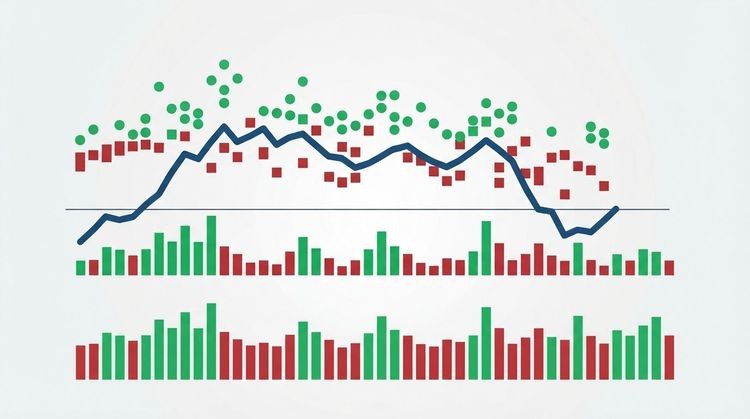
Momentum is one of the most research-validated approaches in commodity markets. The core idea is simple: commodities that have outperformed over recent months tend to keep outperforming, and those that have lagged tend to keep lagging. What makes this work in commodities specifically is that price trends often reflect slow-moving structural forces like supply bottlenecks, currency tailwinds, or policy shifts that take months to fully price in.
The most reliable implementation uses a 12-month lookback period, which captures medium-term macro and supply-demand imbalances without overreacting to short-term noise. A three-month or six-month window tends to generate too many false signals. Twelve months filters those out while still being responsive to real trend changes.
Position sizing is where most traders undercut themselves. Scaling each position to a 10% volatility target means you hold less of a highly volatile commodity like natural gas and more of a steadier one like gold, keeping your actual risk exposure consistent across the portfolio. Without this adjustment, one volatile position can swamp all your other trades.
Practical implementation tips worth keeping in mind:
- Rank your commodity universe by 12-month return each month and go long the top tier.
- Rebalance monthly rather than daily to reduce transaction costs without sacrificing signal quality.
- Use volatility-adjusted sizing at the individual position level, not just the portfolio level.
- Combine with a simple trend filter (price above 200-day moving average) to avoid buying momentum in a broader bear market.
Pro Tip: Check out top investment strategies that blend momentum with macro overlays. Adding a macro filter that avoids momentum longs during broad deflationary environments meaningfully reduces drawdowns.
2. Trend following as a systematic commodity technique
Trend following is the oldest systematic commodity trading technique still standing. It works because commodity markets spend extended periods in directional moves driven by supply shocks, demand surges, or macro regime shifts. Unlike equities, these trends are often anchored in physical realities that take years to resolve.
The strategy rests on three core principles:
- Price is the only signal. Don’t try to predict what oil “should” be worth. React to what it is doing.
- Cut losses quickly. A predetermined stop-loss, often set using Average True Range (ATR), gets you out before a small loss becomes a large one.
- Hold winning trades as long as the trend persists. Trend followers make most of their annual returns from a handful of extended moves. Exiting winners early destroys the edge.
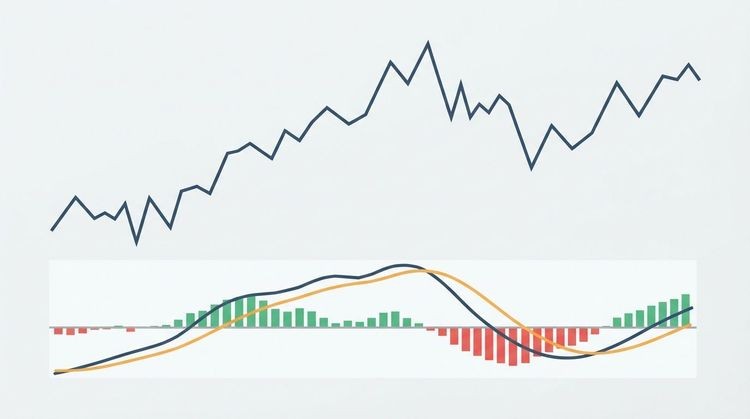
Common technical tools used in commodity trend following include moving averages (50-day and 200-day crossovers), Donchian channels for breakout entries, and ATR for volatility measurement and stop placement. Each tool is a way of letting the market define the trend rather than imposing your own opinion on it.
For retail traders, CFDs offer access to commodity trend following without holding physical assets, and platforms supporting MT5 allow you to apply systematic rules with manageable margin. Futures are the institutional standard, but CFDs lower the barrier to entry considerably.

The most common pitfall? Effective trend followers focus on price signals and enforce strict loss-cutting rather than succumbing to the temptation to call a reversal too early. Trend following has flat periods that last months. Most traders abandon the strategy right before it starts working.
Pro Tip: Read up on mastering market trends for a detailed breakdown of how disciplined trend systems have produced consistent annual returns. The edge is in the rules, not the predictions.
3. Spread trading: exploiting relative value between commodities
Spread trading is one of the most underused commodity trading techniques among retail traders, and that is partly because it requires more setup. Instead of betting that crude oil goes up or down, you trade the price relationship between two correlated commodities. The directional risk is significantly reduced because you are long one commodity and short another simultaneously.
Spread trading lowers directional risk by anchoring your profit or loss to the relative performance of two assets, not the absolute move of one. Here are the most common commodity spreads worth understanding:
| Spread | What It Measures | Why Traders Use It |
|---|---|---|
| Crack spread | Difference between crude oil and refined products (gasoline, diesel) | Reflects refinery profit margins; signals supply/demand shifts in energy |
| Gold/silver ratio | Ounces of silver needed to buy one ounce of gold | Identifies relative value between precious metals; mean-reverts over time |
| WTI/Brent spread | Price difference between two major crude benchmarks | Reflects supply logistics and regional market conditions |
| Corn/wheat spread | Price ratio between agricultural commodities | Useful for tracking substitution effects and crop cycle dynamics |
The main challenges of spread trading:
- You are managing two simultaneous positions, which doubles your complexity and transaction costs.
- Relationships can break down during extreme market dislocations (COVID-19 drove WTI negative while Brent held).
- Margin requirements differ between exchanges and products.
Spread trading suits traders who understand the underlying supply chains of the commodities they are trading. It is not the right starting point for beginners, but for traders with solid commodity market analysis skills, it can generate returns with meaningfully lower volatility than outright directional trades.
4. Seasonality strategies in agricultural and energy markets
Commodity prices follow the rhythms of the physical world in ways that equities simply do not. Wheat has a harvest cycle. Natural gas has a heating season. These patterns repeat with enough consistency to form the basis of a trading strategy, but they require careful handling.
Seasonality is a powerful statistical tendency, not a guaranteed outcome. The historical pattern tells you what has happened on average over many years. It does not tell you what will happen this year if there is a drought, a supply glut, or a geopolitical disruption. Relying solely on seasonal charts without checking current fundamentals like weather forecasts and inventory reports is how seasonal traders lose money.
Practical guidelines for using seasonality well:
- Identify the historical window. Natural gas prices typically rise in fall as heating demand builds. Corn often sees price pressure after harvest. Know the pattern before you trade it.
- Confirm with current inventory data. If storage is at a five-year high, a typical seasonal rally may be muted or delayed.
- Wait for technical confirmation. Seasonal commodity moves should be confirmed with technical signals before entry. A breakout above resistance that aligns with the seasonal window is far more reliable than the seasonal window alone.
- Define your exit in advance. Seasonal trades have a time component. Know when the historical window closes and be prepared to exit regardless of whether the move has materialized.
Pro Tip: Use Handy’s live commodity prices to track real-time inventory and price movements alongside your seasonal research. Seeing current price action in context with historical patterns sharpens your timing considerably.
5. Fundamental-driven trading: macro, supply-demand, and geopolitical analysis
Commodities are fundamentally physical assets, and their prices ultimately reflect the balance between supply and demand in the real world. That makes fundamental analysis uniquely applicable to commodities in ways it often is not to equities, where sentiment and multiple expansion can drive prices for years regardless of earnings.
Key fundamental drivers you need to track:
- Inventory and storage data. Weekly EIA reports for crude and natural gas, USDA crop reports for agricultural commodities. These are the heartbeat of supply-demand balancing in real time.
- Currency movements. Most commodities are priced in U.S. dollars. A weakening dollar tends to support commodity prices and vice versa.
- Geopolitical developments. Supply disruptions in key producing regions (Russia, Middle East, South America) can move prices dramatically and quickly.
- Macro regime context. Inflationary environments favor hard commodities like gold, copper, and oil. Deflationary regimes do the opposite.
The most important discipline in fundamental trading is building a clear, documented thesis before entering a position. Successful commodity trading requires writing down what you expect to happen, why you expect it, and what specific event or data point would prove you wrong. Without that structure, you end up holding trades based on vague narrative rather than testable logic.
“The most disciplined commodity exposure is one sized to match the specific macro scenario it is intended to hedge, scaling up only as the market confirms your thesis.” — Commodity price outlooks
Position sizing should be tied to conviction, which itself should be tied to how many fundamental drivers are aligned. One weak signal warrants a small position. Three corroborating signals from inventory data, currency trends, and geopolitical context justify a larger one. Integrating technical signals with fundamental drivers, such as inventory reports and global trade flows, improves trading outcomes by reducing the odds of being early or wrong on the timing.
6. Risk management as a strategy in its own right
Most traders treat risk management as an afterthought. The traders who last in commodity markets treat it as the strategy. Discipline in position sizing and risk limits prevents over-leveraging in futures, which is where commodity traders most often blow up. Futures markets offer significant leverage, and without strict controls, one bad trade can wipe out months of gains.
A practical risk management workflow for commodity traders should include:
- Defining maximum loss per trade as a fixed percentage of total capital (1-2% is a common standard).
- Setting session-based or daily loss limits so a bad morning does not turn into a catastrophic day.
- Maintaining a trading journal that records thesis, entry, stop, target, and outcome for every trade.
Commodity intraday traders benefit especially from predefining max loss limits before each session and treating those limits as non-negotiable. The journal serves a second purpose: it reveals patterns in your own behavior, the times of day you overtrade, the setups where you consistently lose, and the conditions where your edge is strongest.
For a more detailed look at practical risk control examples tailored to commodity volatility, reviewing hedging and sizing case studies can help you build a framework that fits your specific instruments and timeframes.
Pairing good risk management with a market volatility checklist keeps you grounded when commodity markets spike. Volatility is the heartbeat of these markets. The goal is not to avoid it but to size your exposure so it never threatens your ability to keep trading.
My perspective on what actually separates commodity traders who survive
I’ve tracked commodity markets through enough cycles to say this clearly: the traders who fail are almost never failing because they picked the wrong strategy. They fail because they abandon their strategy the moment it stops working for two weeks.
What I’ve learned is that the edge in any of these approaches, whether momentum, trend following, or fundamental analysis, is only realized over dozens of trades and multiple market conditions. Chasing a perfect signal is the wrong goal. Writing a clear trade plan and executing it consistently is the right one. Every trade should have a documented thesis with a specific driver and a clearly defined invalidating event. That single habit changes your trading more than any indicator ever will.
I’ve also found that the traders who blend fundamental context with technical timing outperform those who rely on either alone. Commodity markets differ fundamentally from equities because physical supply-demand cycles create structural price moves that neither pure chart readers nor pure macro analysts fully capture on their own.
Stay flexible. Adjust your approach as market regimes shift. And never confuse strong conviction with correct position sizing.
How Handy.Markets can support your commodity trading strategy
Executing any strategy well depends on having the right data at the right moment. Handy.Markets gives you live commodity prices with real-time charts and market alerts across energy, metals, and agricultural markets, all in one place.
Whether you are monitoring a seasonal setup in natural gas, tracking momentum in gold, or watching inventory reports for a fundamental trade, you can configure customizable price alerts delivered instantly via Telegram, Slack, Discord, SMS, or email. That means your strategy does not depend on you watching a screen all day. You set the trigger levels, and Handy notifies you when the market reaches them. You can also track stocks, forex, and indices alongside your commodity positions through Handy’s full markets dashboard, giving you the macro context your commodity trades need.
FAQ
What is the best commodity trading strategy for beginners?
Trend following is the most beginner-friendly systematic approach because it relies on clear, rule-based signals like moving average crossovers and defined stop-losses. Start with one or two liquid commodities like gold or crude oil before expanding your universe.
How do I use seasonality in commodity trading?
Identify the historical seasonal window for your commodity, then confirm the setup with current inventory data and a technical entry signal before trading it. Seasonal patterns are statistical tendencies, not reliable annual guarantees, so always validate with present-day fundamentals.
What is a commodity spread trade?
A commodity spread trade involves going long one commodity and short a related one to profit from changes in their price relationship rather than outright directional movement. Common examples include the crack spread between crude oil and refined products.
How much capital should I risk per commodity trade?
Most professional commodity traders risk 1-2% of total trading capital per individual trade. Strong conviction without sizing discipline is essentially just leverage in disguise, and that is what causes blow-ups in futures markets.
How do I build a fundamental thesis for a commodity trade?
Write down the specific driver (supply shock, policy change, weather event), your price target, a timeframe, and the exact data point or event that would prove your thesis wrong. Documenting this process before entering the trade prevents emotional decision-making once the position is live.