
TL;DR:
- Personalized market monitoring tailors data analysis to individual investment goals, reducing noise and enabling faster, goal-aligned decisions. It uses AI-driven agentic systems to continuously ingest, filter, and synthesize relevant signals across multiple sources, improving strategic foresight. Success depends on disciplined setup, clear framing questions, and regular review to keep alerts aligned with evolving strategies.
Personalized market monitoring is the practice of tailoring data collection and analysis to your specific investment goals, filtering out noise and delivering only the intelligence that moves your portfolio forward. Generic financial newsletters and broad market feeds treat every investor the same. They don’t know your risk appetite, your sector focus, or your time horizon. The industry term for this discipline is market intelligence personalization, and it sits at the intersection of AI-driven data filtering and strategic investment management. Understanding why personalize market monitoring matters is the first step toward replacing reactive guesswork with proactive, goal-aligned decisions.
Why personalize market monitoring instead of using generic feeds
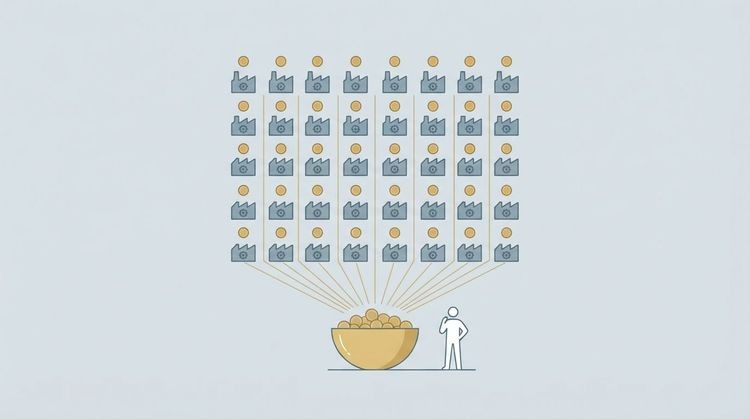
Generic monitoring is the financial equivalent of drinking from a fire hose. You get volume, but very little of it applies to your actual positions or strategy. Personalized monitoring shifts focus from population-level thresholds to your individual baseline, flagging only the deviations that match your risk profile and goals. That shift alone eliminates the anxiety of sorting through hundreds of irrelevant alerts every morning.
The practical benefits of market monitoring personalization show up quickly once you compare the two approaches side by side.
| Feature | Generic Monitoring | Personalized Monitoring |
|---|---|---|
| Data sources | 1–3 broad feeds | 15+ filtered sources |
| Alert relevance | Population-wide thresholds | Individual baseline deviations |
| Decision speed | Manual review required | Real-time, structured intelligence |
| Noise level | High | Low, deduplicated |
| Strategic alignment | None | Matched to your goals and risk appetite |
The difference in decision speed is significant. Automating market monitoring replaces hours of manual data collection with structured real-time intelligence, enabling immediate responses to competitor price changes or sector shifts. For active traders, that speed advantage compounds over time.
- Reduced information overload: Filters remove signals unrelated to your watchlist or strategy.
- Faster execution: Structured alerts reach you before manual reviewers finish their morning scan.
- Higher relevance: Every report or notification ties directly to your defined investment interests.
- Lower operational cost: Automation cuts the labor of daily data gathering.
Pro Tip: Set your monitoring criteria before you set your alerts. Defining what a “meaningful move” means for each asset class you follow prevents alert fatigue and keeps your attention on the signals that actually require a decision.
What technologies power effective personalized monitoring?
The engine behind modern customized market analysis is agentic AI, a category of systems where autonomous software agents continuously ingest, analyze, and synthesize data without waiting for a human prompt. These agents don’t just collect data. They interpret it, cross-reference it across sources, and surface the findings most relevant to your defined objectives.
Here is how the technology stack typically works in practice:
- Data ingestion layer: Agents pull from news feeds, SEC filings, earnings call transcripts, social sentiment platforms, and price data simultaneously.
- Filtering and deduplication: The system applies your user-defined criteria to remove redundant or irrelevant signals, a process platforms like Signex execute across 15+ diverse data sources.
- Synthesis and framing: Rather than delivering raw data, the agent explains why a market movement matters in the context of your portfolio. Google’s information agents run continuously to synthesize cross-source insights and deliver proactive intelligence on equities and sector shifts via natural-language directives.
- Delivery and alerting: Structured outputs reach you through your preferred channel, whether that is email, Slack, Telegram, or a dashboard.
- Learning and refinement: Over time, well-designed systems adjust their filtering based on which alerts you act on and which you dismiss.
The natural-language directive capability deserves special attention. Instead of configuring complex rule sets, you describe your monitoring intent in plain English. “Alert me when semiconductor stocks with a beta above 1.5 drop more than 3% in a single session” becomes a standing instruction the agent executes around the clock. This moves the importance of personalized monitoring from a technical feature to a practical workflow advantage.
- Agents operate 24/7, covering Asian and European sessions while you sleep.
- Cross-source synthesis catches weak signals that single-feed tools miss entirely.
- Natural-language setup lowers the barrier for investors who are not data engineers.
How do you implement personalized monitoring that actually works?
The most common failure in customized market analysis is not a technology problem. It is a strategy problem. Leaders waste time reading broadly unrelated content because they never defined specific objectives before turning on their monitoring tools. The fix is disciplined setup before you touch a single alert configuration.

Start with precise framing questions. Before configuring any system, write down the specific questions your monitoring needs to answer. Examples include: “Which emerging-market currencies are showing unusual volatility relative to their 90-day average?” or “What regulatory developments could affect my biotech holdings in the next quarter?” Formulating targeted questions like these drives outcome-influencing intelligence rather than generic noise.
Build a centralized intelligence repository. Temporary Slack channels and email threads dissolve insights the moment a conversation moves on. A persistent, searchable archive preserves historical context and lets you spot patterns across weeks or months. Think of it as a second brain for your market intelligence workflow. Tools like Notion or a dedicated folder structure in your research platform both work well for this purpose.
Cross-reference weak signals before acting. A single data point rarely tells the full story. When two or three unrelated sources flag the same emerging trend, that convergence is a much stronger signal than any one alert alone. This cross-referencing habit is what separates traders who anticipate moves from those who react to them.
- Define success criteria for each monitoring objective before setup.
- Assign a review cadence: daily for active trades, weekly for longer-horizon positions.
- Prune your alert list quarterly to remove criteria that no longer match your strategy.
- Separate your “act now” alerts from your “watch and review” signals to protect focus.
Pro Tip: Avoid the trap of monitoring everything at once when you are starting out. Pick two or three asset classes that align with your current portfolio and build your personalized system there first. Expand only after you have validated that your framing questions are producing useful intelligence.
What is the real impact on investment decision-making?
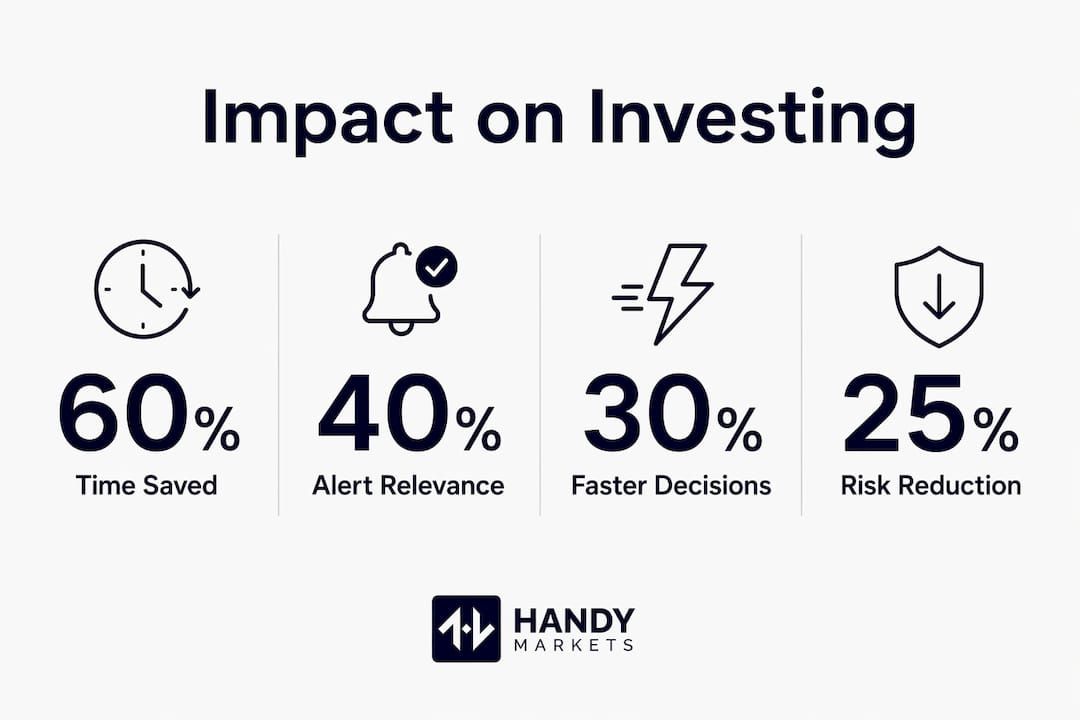
The impact of tailored market insights on investment outcomes is measurable across three dimensions: relevance, speed, and strategic foresight. Continuous tailored data helps anticipate market preference shifts and unmet needs before they become mainstream trends. That early-mover advantage is the clearest reason to personalize monitoring rather than rely on generic feeds that every other investor also receives.
Consider the difference in how a portfolio manager operates before and after adopting a personalized system.
| Dimension | Before Personalization | After Personalization |
|---|---|---|
| Daily research time | 2–3 hours of broad reading | 20–30 minutes of targeted review |
| Alert relevance rate | Low, mostly noise | High, matched to active positions |
| Trend anticipation | Reactive, post-event | Proactive, pre-event signal detection |
| Strategy adjustment speed | Days | Hours or less |
| Competitive awareness | Periodic, manual | Continuous, automated |
The reduction in daily research time is not just a convenience. It redirects cognitive energy toward analysis and decision-making rather than data gathering. AI-powered personalized alerts prevent information overload by highlighting only deviations meaningful to individual risk profiles. That focus is what allows you to act with confidence rather than hesitation.
Personalized monitoring also supports better risk management. When your system is calibrated to your specific holdings and risk tolerance, it surfaces warnings about correlated exposures or sector concentration before they become portfolio-level problems. You can follow live market prices across asset classes without drowning in data you never needed. The advantages of market customization compound over time as your framing questions sharpen and your alert criteria align more precisely with how you actually make decisions.
Handy.markets take on personalized market intelligence
The most underrated aspect of personalized market monitoring is not the technology. It is the discipline required to use it well. We have seen investors configure sophisticated alert systems and then ignore the outputs because the framing questions were too vague to produce anything they trusted. The tools are only as good as the intent behind them.
What we have found works consistently is treating your monitoring setup as a living document. Your investment thesis evolves. Your risk appetite shifts with market conditions. Your monitoring criteria should shift with them. Reviewing and updating your alert parameters every quarter is not optional maintenance. It is the practice that keeps your intelligence system aligned with your actual strategy.
We are also cautious about over-relying on AI synthesis without maintaining your own analytical judgment. Agentic systems are excellent at pattern detection and signal aggregation. They are less reliable at interpreting the qualitative context that experienced investors recognize immediately. The best approach combines automated monitoring for breadth with human judgment for depth. You can explore advanced market analysis techniques to sharpen that judgment alongside your monitoring practice.
The direction of market intelligence is clearly toward greater personalization and greater automation. Investors who build that discipline now will find the transition to more sophisticated AI-driven tools far smoother than those who wait.
Track every market move that matters to you
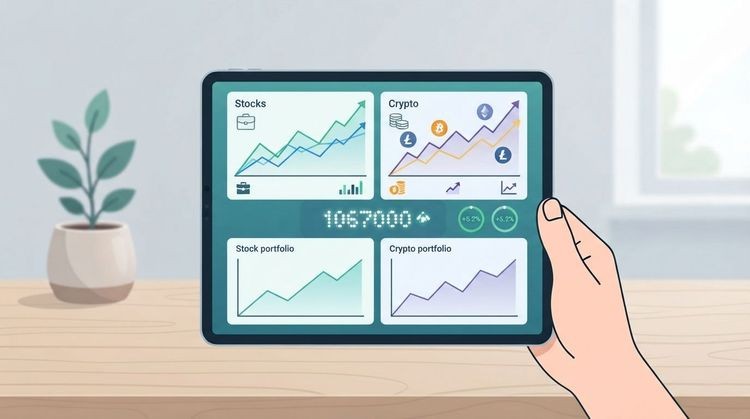
Handy gives you a single place to monitor stocks, crypto, forex, and commodities with price alerts you configure in minutes. No complex setup. No irrelevant noise. You define the assets and the thresholds, and Handy delivers alerts through Telegram, Discord, Slack, SMS, Webhook, or Email the moment your criteria are met.
Whether you are watching a single equity or managing a multi-asset portfolio, Handy’s real-time data and free price alert setup put personalized market intelligence within reach for every investor. Start building your tailored monitoring system today and stop reacting to moves you should have seen coming.
Key takeaways
Personalized market monitoring outperforms generic feeds by delivering goal-aligned intelligence that reduces noise, accelerates decisions, and supports proactive strategy management.
| Point | Details |
|---|---|
| Personalization beats generic feeds | Tailored systems filter 15+ sources to surface only signals relevant to your portfolio. |
| AI agents work around the clock | Agentic systems like those used by Signex and Google deliver continuous, cross-source intelligence. |
| Setup discipline determines outcomes | Defining precise framing questions before configuration is what separates useful monitoring from noise. |
| Centralized repositories preserve insight | Persistent, searchable archives prevent valuable signals from disappearing in temporary channels. |
| Speed and foresight compound over time | Personalized monitoring cuts daily research time and shifts strategy adjustments from days to hours. |
FAQ
What is market monitoring personalization?
Market monitoring personalization is the process of configuring data collection and alert systems to match an individual investor’s specific assets, risk tolerance, and strategic goals. It replaces broad market feeds with targeted intelligence aligned to your portfolio.
How does personalized monitoring reduce information overload?
AI-powered personalized alerts filter out population-level signals and flag only deviations meaningful to your individual baseline, eliminating the noise that generic financial newsletters generate.
What are the main benefits of market monitoring for active traders?
The core benefits include faster decision speed, higher alert relevance, reduced daily research time, and the ability to anticipate market shifts before they become mainstream trends.
How do i start personalizing my market monitoring strategy?
Begin by writing specific framing questions your monitoring needs to answer, then configure alerts around those questions. Build a centralized repository for captured intelligence and review your criteria quarterly as your strategy evolves.
Can personalized monitoring work across multiple asset classes?
Yes. Modern platforms like Handy aggregate real-time data across stocks, crypto, forex, and commodities, allowing you to apply personalized alert criteria consistently across every asset class you follow.