
TL;DR:
- Keep cryptocurrency investments to 5-10% of your total portfolio to manage risk effectively.
- Use dollar-cost averaging and diversify across established coins to reduce volatility impact.
- Focus on emotional discipline and secure storage to ensure long-term investment stability.
Cryptocurrency markets are pulsing with opportunity, but they can just as easily wipe out a significant chunk of your savings in a single afternoon. For retail investors, the challenge is not just picking the right coins. It is knowing how to manage the emotional rollercoaster that comes with extreme price swings. Volatility triggers emotional traps like FOMO (fear of missing out) and panic selling, two behaviors that consistently erode returns. This article gives you seven research-backed, actionable tips to navigate that volatility with more confidence and fewer costly mistakes.
Table of Contents
- Set realistic allocation limits
- Stick to established coins for beginners
- Master dollar-cost averaging and position sizing
- Diversify and use stop-losses
- Choose secure storage and reliable exchanges
- Research thoroughly to avoid scams
- Adopt a long-term mindset and manage emotions
- What most experts miss about retail crypto investing
- Take your next step with market tools
- Frequently asked questions
Key Takeaways
| Point | Details |
|---|---|
| Limit crypto exposure | Keep crypto investments to a sensible 5-10% of your portfolio to protect yourself from major losses. |
| Choose established coins | Opt for reputable cryptocurrencies like Bitcoin and Ethereum, especially if you’re new to the market. |
| Use dollar-cost averaging | Spread your investment over time to reduce the impact of volatility and avoid market timing errors. |
| Diversify and set stop-losses | Build a portfolio of different assets and use stop-loss orders to manage risk actively. |
| Research and secure assets | Thoroughly vet every project and store your crypto in hardware wallets for maximum safety. |
Set realistic allocation limits
With risk awareness set, let’s tackle how much you should actually invest in crypto. This is often the first mistake retail investors make. They go all-in on a coin they heard about in a social media thread and end up with their life savings exposed to one of the most volatile asset classes on the planet.
The core rule is simple but powerful. Experts recommend keeping crypto to 5-10% of your total investment portfolio, and only investing money you could afford to lose completely. This is not pessimism. It is smart portfolio construction that keeps you financially stable even during brutal market corrections.
Here is why allocation limits matter so much:
- Catastrophic loss prevention: If crypto represents 5% of your portfolio and drops 80%, your total portfolio only drops 4%. If it represents 50%, an 80% drop is devastating.
- Emotional stability: Smaller allocations allow you to hold through downturns without panic selling.
- Room to grow: Keeping most of your money in stocks, bonds, or other assets means your wealth still builds even during crypto bear markets.
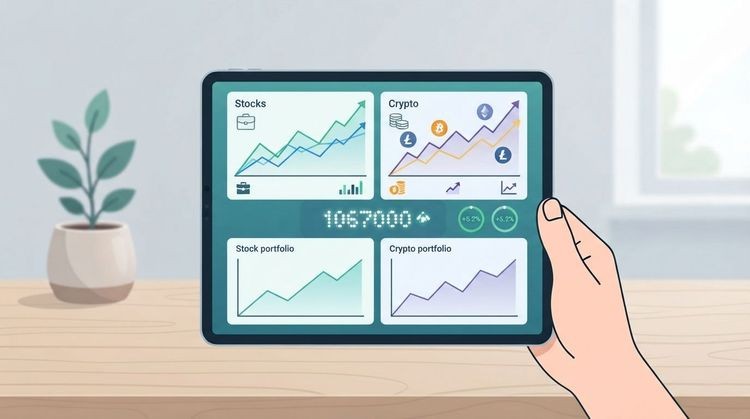
A practical example: Imagine you have $50,000 in savings. Allocating 5-10% means putting $2,500 to $5,000 into crypto. That range gives you meaningful exposure to potential upside without jeopardizing your financial security. You can monitor your total portfolio across all asset classes to make sure your crypto position stays within your target range as prices fluctuate.
Using risk analysis tools to calculate your overall risk exposure can also show you how crypto volatility interacts with the rest of your investments, giving you a clearer picture before you commit.
Pro Tip: Rebalance your portfolio quarterly. If crypto surges and suddenly represents 20% of your holdings, trim it back down to your target range. This forces you to sell high automatically.
Stick to established coins for beginners
Once your allocation is set, the next decision is choosing which coins to invest in. This is where many new investors go wrong, chasing low-cap coins with promises of 1000x returns and ending up with near-zero assets.
For beginners, sticking to established coins like Bitcoin (BTC) and Ethereum (ETH) is the safer starting point. These are not guaranteed investments, but they have track records, real-world utility, large developer communities, and significant institutional interest backing them up. Speculative altcoins and brand-new project tokens carry far greater risk, including the risk of complete failure.
How do you identify a more legitimate coin beyond Bitcoin and Ethereum? Look for these signals:
- Clear use case: The project solves a real problem, not just a theoretical one.
- Active development: Regular updates, open-source code on GitHub, and transparent roadmaps.
- Credible leadership: Named founders with verifiable professional histories.
- Real adoption: Partnerships, users, and transactions already happening on the network.
- Adequate liquidity: High daily trading volume reduces the risk of being unable to sell.
If you are curious about lower-risk ways to grow your wealth while learning crypto basics, exploring beginner investment alternatives like bonds can give you stability and confidence before you increase your crypto exposure.
Pro Tip: Look for project transparency first. If a team is anonymous, has no verifiable whitepaper, and is pushing urgency on social media, those are clear warning signals. Legitimate projects welcome scrutiny.
Master dollar-cost averaging and position sizing
Now, let’s explore strategies for entering the cryptocurrency market methodically. Dollar-cost averaging (DCA) is arguably the most beginner-friendly tactic available to retail crypto investors.

DCA means investing a fixed dollar amount at regular intervals, regardless of price. Instead of trying to time the market perfectly (which even professional traders consistently fail to do), you simply buy $100 worth of Bitcoin every week. Some weeks you buy at a higher price, some weeks lower. Over time, your average cost per coin smooths out.
Here is how to implement DCA effectively:
- Set your fixed amount. Decide how much you can invest regularly without affecting your essential expenses.
- Choose your interval. Weekly or biweekly purchases work well for most retail investors.
- Pick your assets. Stick to your established coin choices.
- Automate the process. Many exchanges allow recurring purchases. Automation removes the emotional temptation to skip a buy during a crash.
- Track your average cost. Know your average purchase price so you can make informed decisions about holding or selling.
Using DCA mitigates volatility by spreading your risk across multiple price points, making it one of the most practical tools for retail investors who cannot watch markets all day.
DCA vs. lump-sum investing: a comparison
| Factor | Dollar-cost averaging | Lump-sum investing |
|---|---|---|
| Risk level | Lower, spread over time | Higher, immediate exposure |
| Best market condition | Volatile or declining markets | Sustained bull markets |
| Emotional difficulty | Low, automated routine | High, requires perfect timing |
| Suitable for beginners | Yes | Generally no |
| Return potential | Steady, lower variance | Higher ceiling, higher floor risk |
Research shows DCA outperforms market timing in volatile or falling markets. Lump-sum investing can produce better returns in a sustained bull run, but identifying those conditions reliably is extremely difficult for retail investors. The safety and simplicity of DCA make it the smarter default for most people.
Combining DCA with proper position sizing means never putting more than a set percentage of your crypto allocation into a single asset. For example, if crypto is 10% of your portfolio, you might put 5% in Bitcoin, 3% in Ethereum, and 2% spread across one or two other established coins. You can find advanced investment strategies to refine this further as you gain experience.
Pro Tip: Set a calendar reminder to track crypto prices once a week rather than checking hourly. Frequent price checking fuels anxiety and impulsive decisions.
Diversify and use stop-losses
With entry strategies in place, let’s discuss how to build a stable crypto portfolio. Diversification does not mean owning twenty different coins. It means spreading risk thoughtfully across different types of assets within and beyond the crypto space.
Diversifying across crypto assets and your broader portfolio, combined with position sizing and stop-loss orders, significantly reduces the damage any single asset can cause.
A stop-loss order is an instruction to automatically sell a coin if its price drops below a set level. For example, if you buy Bitcoin at $60,000, you might set a stop-loss at $48,000 (a 20% drop). This caps your potential loss without requiring you to watch the market constantly.
Sample diversified crypto portfolio structures
| Risk tolerance | Bitcoin | Ethereum | Large altcoins | Stablecoins |
|---|---|---|---|---|
| Conservative | 60% | 30% | 0% | 10% |
| Moderate | 50% | 30% | 15% | 5% |
| Aggressive | 40% | 25% | 30% | 5% |
Key principles to remember when diversifying:
- Do not spread money so thin that no single position can make a meaningful difference.
- Include stablecoins as a buffer. They hold value and let you buy quickly during dips.
- Rebalance regularly to maintain your target allocation ratios.
- Read up on portfolio diversification tips that apply beyond crypto.
Staying aware of broader crypto market trends helps you understand when to be more defensive and when conditions favor growth. And when things get chaotic, a volatility checklist can help you stay systematic rather than reactive.
Choose secure storage and reliable exchanges
A diversified portfolio is only as safe as your storage and exchange choices. Many investors have done everything right with their strategy but lost everything because of a hacked exchange or a lost wallet password.
The two main storage options are hot wallets (connected to the internet) and cold wallets (offline hardware devices). Hardware wallets are the safest option for long-term holdings. Devices like Ledger or Trezor store your private keys offline, making them immune to online hacks. Hot wallets are more convenient for active trading but carry higher risk.
When choosing an exchange, follow these steps:
- Check regulatory status. Prefer exchanges registered with financial regulators in your country.
- Review security history. Has the exchange been hacked before? How did they handle it?
- Confirm insurance policies. Some exchanges insure customer funds.
- Verify withdrawal options. Ensure you can move your crypto to your own wallet easily.
- Check fee structures. High trading fees compound over time and eat into your returns.
Regulatory uncertainty and scams persist across the crypto industry, making exchange selection one of your most important decisions. Prefer regulated platforms and avoid keeping large amounts of crypto on any exchange long term.
Pro Tip: Enable two-factor authentication (2FA) on every account connected to your crypto holdings. Use an authenticator app rather than SMS for stronger security. Explore more protective approaches in our investment articles library.
Research thoroughly to avoid scams
Securing assets is essential, but research is your first line of defense against fraud. The crypto market, unfortunately, still harbors a significant number of scam projects, pump-and-dump schemes, and outright fraud.
Thorough research means reviewing whitepapers, evaluating the project team, and using tools like CoinMarketCap to verify trading volumes, market cap, and coin supply. This takes time, but it consistently separates investors who survive from those who lose everything on a fraudulent project.
Watch for these scam signals:
- Guaranteed returns: No legitimate investment guarantees profits.
- Pressure to act fast: Urgency is a manipulation tactic.
- Anonymous team: Real projects are led by people you can verify.
- No working product: Many scams exist only as promises and websites.
- Celebrity endorsements: These are frequently fabricated or paid.
“If a project cannot clearly explain what it does, who built it, and why the token has value, do not invest. Confusion is not innovation.”
Understanding the mechanics of price movements also helps you spot manipulation. Our guide on understanding market fluctuations breaks down what drives sudden price spikes and how to distinguish real momentum from manufactured hype.
Adopt a long-term mindset and manage emotions
Finally, long-term strategies and emotional discipline can make all previous tips even more powerful. The single biggest destroyer of retail investor returns in crypto is not bad coin selection. It is emotional decision-making.
A long-term HODL strategy (holding your assets through market cycles rather than actively trading) smooths out volatility and reduces the emotional decisions that cost you money. It also has tax advantages in many countries, where long-term capital gains rates are lower than short-term trading rates.
“For most retail investors, HODLing established crypto positions over years generates better results than active trading, primarily because it removes the high-frequency emotional decisions that consistently destroy value.”
Emotions that hurt investors most include:
- FOMO (fear of missing out): Buying at the top because everyone is talking about it.
- Panic selling: Selling at the bottom because prices are falling fast.
- Revenge trading: Trying to quickly recover losses by taking bigger risks.
- Overconfidence: Assuming a winning streak reflects skill rather than market conditions.
Setting price alerts is one of the most practical ways to curb emotional monitoring. Instead of watching the market constantly, you get notified when something actually requires your attention. Our guide on mastering volatility goes deeper on building emotional resilience alongside smart strategy.
Pro Tip: Write down your investment thesis for each coin you hold, including your target price and your exit plan, before you buy. When prices swing wildly, refer back to that document instead of reacting impulsively.
What most experts miss about retail crypto investing
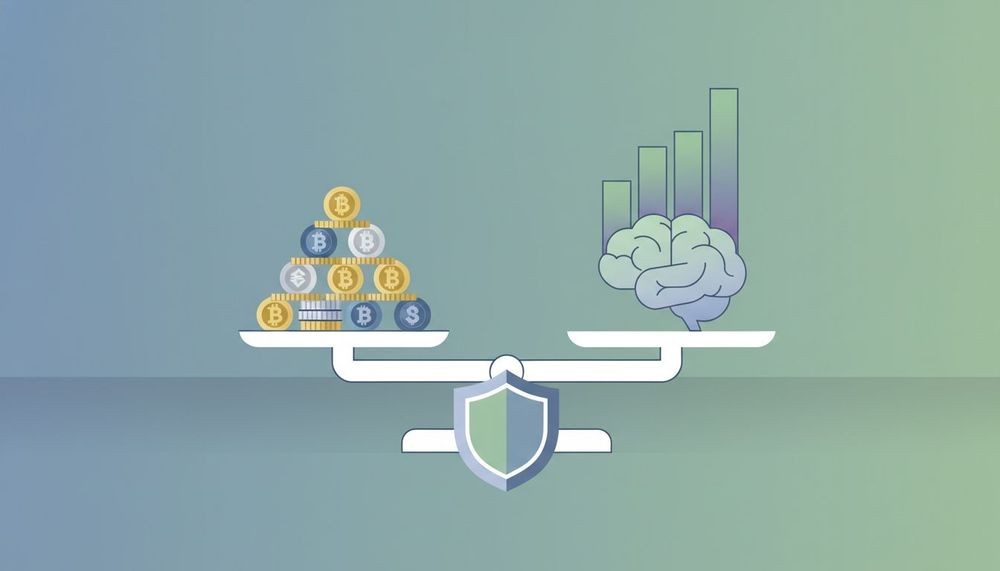
Most mainstream crypto advice focuses on coin selection, timing, and technical analysis. We think that misses the bigger picture. After observing how retail investors actually behave during market downturns, one truth stands out: most losses are emotional, not technical.
You can have a perfectly constructed portfolio with solid diversification, great coin selection, and a solid DCA strategy. Then a 30% market correction hits, panic sets in, and you sell everything at the worst possible moment. The strategy was fine. The execution fell apart under pressure.
This is why we believe discipline beats strategy for most investors. Not because strategy does not matter, but because the best strategy in the world is worthless if you abandon it at the first sign of stress. Retail investors who succeed over the long term are not necessarily the most knowledgeable. They are the most consistent.
The practical implication is that building emotional infrastructure matters as much as financial planning. That means setting up alerts so you are not glued to price charts, establishing hard rules about when you will and will not sell, and keeping your crypto allocation small enough that a 50% drop does not shake your financial foundations. Using expert volatility strategies as a reference during turbulent periods helps you respond with logic rather than fear.
The investors who thrive in crypto are not the ones who predicted the next big coin. They are the ones who kept their boundaries, stayed patient, and let time do the heavy lifting.
Take your next step with market tools
Putting these investing tips into practice becomes much easier when you have the right tools working alongside your strategy. Knowing about DCA, stop-losses, and diversification is one thing. Executing them consistently in real markets requires reliable, real-time data and timely alerts that keep you informed without overwhelming you.
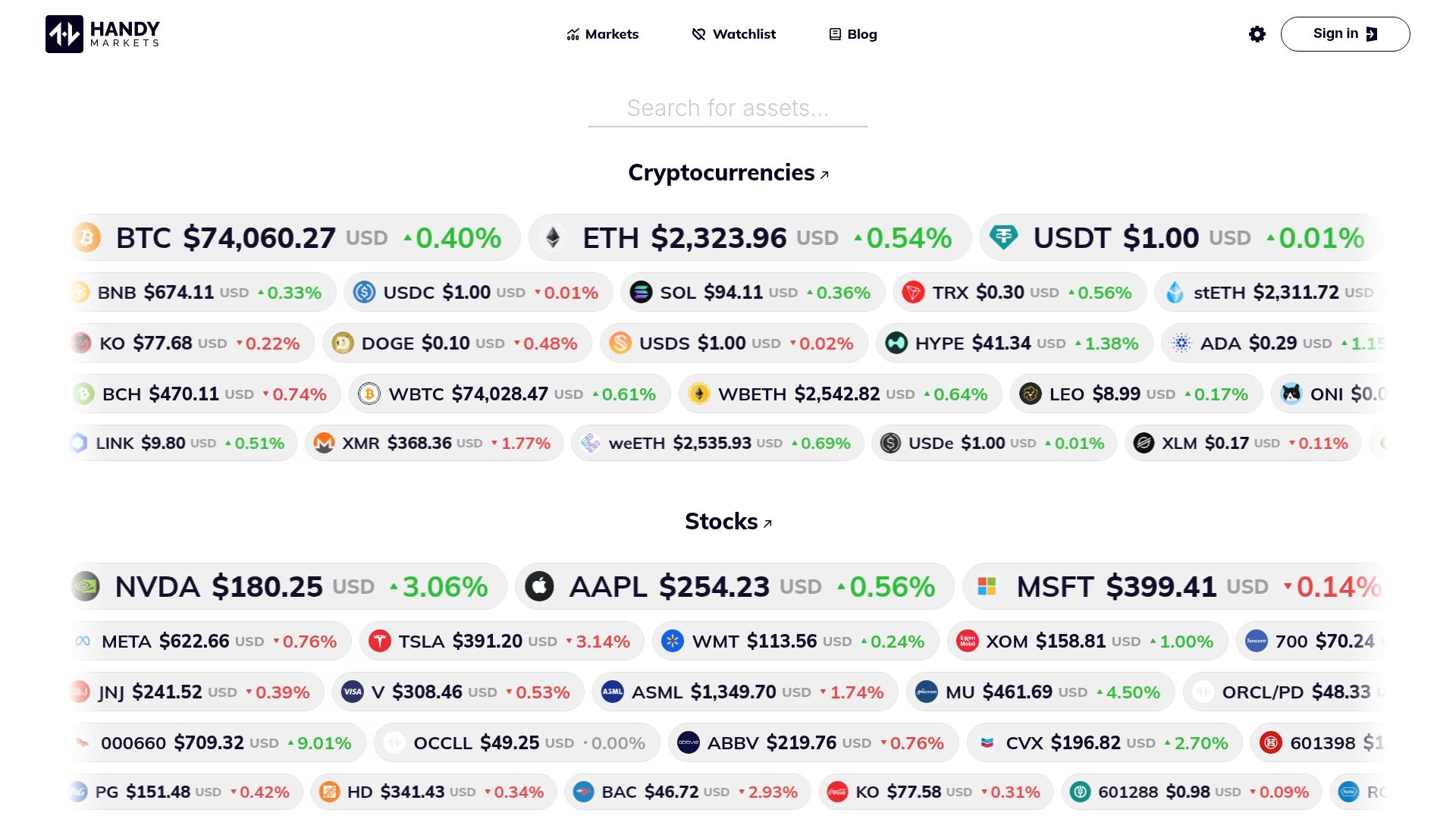
At Handy.markets, we make it simple to track, monitor, and stay ahead of market movements across all the assets in your portfolio. You can set up price alerts across channels like Telegram, Discord, Slack, SMS, and email, so you only engage with the market when it matters. Whether you are following Bitcoin, Ethereum, or keeping an eye on the broader market, our platform lets you track crypto and stocks in one convenient place. Start building your monitoring setup today and invest with more confidence.
FAQ
What percentage of my portfolio should I invest in cryptocurrency?
Experts recommend keeping crypto investments to 5-10% of your portfolio and only investing what you can afford to lose entirely, preserving financial stability even during severe market downturns.
Is dollar-cost averaging better than lump-sum investing in crypto?
Dollar-cost averaging works best in volatile or falling markets, while lump-sum investing suits strong bull markets but carries more risk. DCA outperforms market timing for most retail investors because it removes the need for precise entry points.
How do I securely store cryptocurrency?
Use hardware wallets for long-term holdings and reserve hot wallets only for funds you are actively trading, while always researching the security practices of any exchange you use.
How can I avoid cryptocurrency scams?
Review the project whitepaper, verify the team’s identities, and cross-check data on reputable sites. Thorough research using CoinMarketCap and similar tools helps you separate legitimate projects from fraudulent ones before committing any funds.
Should retail investors choose HODL or active trading?
Most retail investors benefit significantly from a long-term HODL approach, which reduces emotional decision-making, lowers transaction costs, and often delivers stronger results than frequent short-term trading.
Recommended
- Market Data Trends In 2026: Guide For Traders | Handy.Markets
- Cryptocurrencies: Live Prices, Charts & Price Change Alerts | Handy.Markets
- Mastering Volatility In Investing: A Beginner’s Guide To Navigating Market Swings In 2025 | Handy.Markets
- Top 6 Cryptocurrencyalerting.com Alternatives 2026 | Handy.Markets