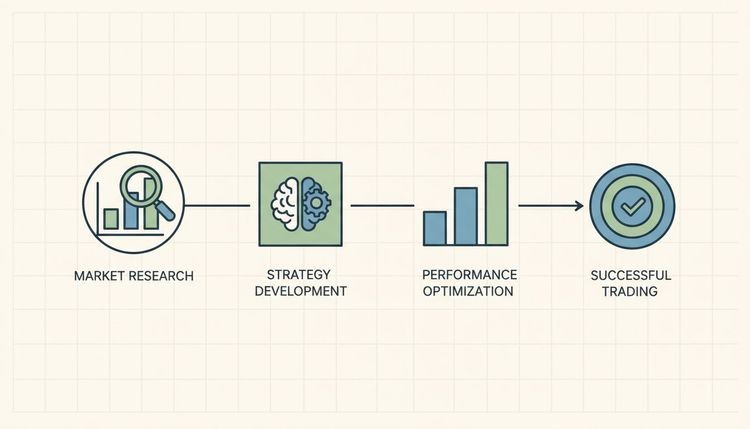


Market volatility challenges even experienced traders and investors. Sudden price swings can trigger panic selling, margin calls, and portfolio losses if you lack a structured response plan. A comprehensive market volatility checklist equips you with actionable strategies to navigate risks, protect capital, and identify opportunities during turbulent markets. This guide walks you through essential criteria, advanced forecasting techniques, and practical checklist items to optimize your portfolio decisions across cryptocurrencies, stocks, commodities, and other financial assets.
Table of Contents
- Key takeaways
- Criteria for an effective market volatility checklist
- Essential checklist items for managing portfolio risk and liquidity
- Leveraging advanced volatility forecasting and hedging strategies
- Comparing checklist approaches and making informed decisions
- Explore live market tools and alerts at Handy.Markets
- Frequently asked questions
Key Takeaways
| Point | Details |
|---|---|
| Leverage controls and size limits | Set clear position size limits and active leverage controls to prevent outsized losses during volatility. |
| Volatility based rebalancing | Rebalance when predefined volatility thresholds are crossed to maintain risk targets and prevent drift. |
| Liquidity risk protocols | Implement asset specific liquidity checks such as bid ask spreads, volume, and exit time estimates to avoid forced losses. |
| Governance for crises | Document who can authorize emergency actions and which hedging approvals apply to align fast decision making. |
| Communication templates | Prepare standardized messages for stakeholders outlining actions thresholds and responsibilities during volatility events. |
Criteria for an effective market volatility checklist
Your checklist must address multiple dimensions of market risk to be truly effective. Mercer provides a comprehensive market volatility checklist covering portfolio, risk, liquidity, market impact, and governance considerations. Without this breadth, you risk blind spots that can destroy portfolio value when markets turn volatile.
An effective checklist includes actionable monitoring protocols you can execute quickly. Vague items like “review risk” fail under pressure. Instead, specify exact metrics to track, thresholds that trigger action, and decision makers responsible for each step. This precision transforms your checklist from a theoretical exercise into a practical survival tool.
Adaptability across asset classes separates robust checklists from rigid templates. Cryptocurrency volatility differs fundamentally from commodity price swings or equity market corrections. Your checklist must account for these unique characteristics while maintaining a consistent risk management framework. For deeper insights on navigating market swings, explore our guide on mastering volatility in investing.
Key criteria your checklist must satisfy:
- Clear leverage control mechanisms with position size limits
- Rebalancing guidelines triggered by specific volatility thresholds
- Liquidity assessment protocols for each asset class
- Governance structures defining who makes emergency decisions
- Communication templates for stakeholders during market stress
Pro Tip: Test your checklist during periods of moderate volatility before you need it in a crisis. This rehearsal reveals gaps and builds muscle memory for your trading team.
Essential checklist items for managing portfolio risk and liquidity
Portfolio risk management starts with reviewing trading agreements and counterparty risk. Haynes Boone offers a risk mitigation checklist for fund managers including review of trading agreements, counterparty risk, liquidity options, and portfolio limits. Your broker’s financial health matters more during volatility spikes when margin calls and redemptions surge. Check credit ratings quarterly and maintain backup relationships with alternative brokers.

Concentration limits prevent single positions from destroying your portfolio. Set maximum exposure thresholds for individual assets, sectors, and correlated asset groups. When Bitcoin represents 40% of your portfolio and altcoins another 30%, you lack true diversification despite holding multiple cryptocurrencies. Rebalance when any position exceeds predetermined limits.
Liquidity assessment goes beyond checking your cash balance. Evaluate how quickly you can exit positions without moving markets against you. Thinly traded assets that seem profitable on paper can trap capital when you need it most. Review bid ask spreads, average daily volumes, and historical liquidity during past volatility events for each holding.
Governance protocols define decision authority during crises. Who can authorize emergency liquidations? What approval process applies to hedging strategies? Unclear authority structures lead to paralysis or rogue decisions when markets move fast. Document these protocols now, not during a flash crash. Stay updated on market movements through our comprehensive investment articles and monitor specific assets via ETF market alerts.
Critical checklist items:
- Update trading agreements and margin terms annually
- Monitor counterparty credit ratings and exposure limits
- Assess liquidity for rapid repositioning across all holdings
- Document governance protocols for emergency decisions
- Schedule regular stakeholder communication during volatility
Pro Tip: Create a one page decision tree showing exact actions to take at specific volatility levels. This visual guide eliminates confusion when markets are moving against you. For additional perspective on managing risk in gold investment, consider how precious metals fit into your broader volatility strategy.
Leveraging advanced volatility forecasting and hedging strategies
Deep learning models transform volatility forecasting accuracy. TiDE and LSTM models outperform historical approaches when incorporating macroeconomic factors. Deep learning models for volatility forecasting demonstrate that machine learning techniques capture non linear relationships traditional models miss. This improved accuracy helps you size positions appropriately before volatility spikes rather than reacting after losses mount.
Implied volatility provides superior hedging performance compared to historical volatility metrics. Research shows implied volatility outperforms historical volatility in delta neutral hedging for QQQ options with smoother returns. When constructing protective puts or collar strategies, use implied volatility from options markets rather than calculating historical standard deviations. Markets price future expectations more accurately than past behavior predicts.
Volatility targeted position sizing with leverage caps protects capital during regime changes. Calculate position sizes based on target portfolio volatility rather than fixed dollar amounts. When market volatility doubles, your position sizes automatically shrink to maintain consistent risk exposure. This dynamic approach prevents the common mistake of holding oversized positions into volatility spikes.
“Effective volatility forecasting requires combining multiple data sources including price history, options markets, and macroeconomic indicators. No single metric captures the full picture of future market behavior.”
| Forecasting method | Accuracy improvement | Best use case |
|---|---|---|
| TiDE deep learning | 15 to 25% vs GARCH | Multi asset portfolios |
| Implied volatility | 10 to 18% vs historical | Options hedging |
| LSTM networks | 12 to 20% vs traditional | Cryptocurrency markets |
| Ensemble models | 20 to 30% vs single method | Long term forecasting |
Advanced hedging strategies:
- Implement delta neutral hedging using implied volatility parameters
- Apply volatility targeting with position size adjustments
- Use ensemble forecasting combining multiple model outputs
- Set leverage caps that tighten as volatility increases
- Update hedge ratios weekly based on current market conditions
Pro Tip: Backtest your volatility forecasting models across multiple market regimes including the 2020 pandemic crash and 2022 crypto winter. Models that only work in normal markets fail when you need them most. Monitor real time data across financial markets alerts and track specific equities through stock price alerts.
Comparing checklist approaches and making informed decisions
Different checklist approaches emphasize varying aspects of risk management. Portfolio focused checklists prioritize asset allocation and rebalancing triggers. Liquidity centered approaches emphasize cash reserves and redemption terms. Governance heavy frameworks concentrate on decision authority and communication protocols. Understanding these trade offs helps you customize a checklist matching your trading style and risk tolerance.
Complexity versus usability represents a critical balance. Comprehensive checklists covering every possible scenario become too cumbersome to execute under pressure. Overly simplified checklists miss important risk factors. Aim for 15 to 25 actionable items you can realistically review and update during volatile periods. More items dilute focus rather than improving protection.
Asset type considerations shape checklist priorities. Cryptocurrency traders need different protocols than commodity futures traders or equity investors. Crypto markets trade 24/7 with extreme leverage available, requiring continuous monitoring and tighter position limits. Traditional markets have circuit breakers and defined trading hours that influence appropriate responses. Tailor your checklist to the specific characteristics of your primary asset classes. For broader market context, review our volatility investing guide.
| Checklist type | Primary focus | Best for | Limitation |
|---|---|---|---|
| Portfolio risk | Asset allocation and limits | Long term investors | May miss liquidity issues |
| Liquidity management | Cash reserves and exits | Active traders | Less emphasis on forecasting |
| Governance protocols | Decision authority | Fund managers | Can be bureaucratic |
| Advanced forecasting | Predictive models | Quantitative traders | Requires technical expertise |
Implementation steps for your customized checklist:
- Identify your three highest risk exposures across portfolio, liquidity, and counterparty dimensions
- Select 5 to 7 checklist items addressing each high risk area
- Assign specific metrics, thresholds, and responsible parties to each item
- Test the checklist during moderate volatility to identify gaps
- Refine based on execution challenges and update quarterly
- Train all team members on protocols before the next crisis
Time horizon matters significantly. Day traders need intraday volatility metrics and rapid response protocols. Long term investors can use daily or weekly reviews with broader thresholds. Match your checklist review frequency to your typical holding periods and trading style. A mismatch between checklist cadence and trading timeframe creates either excessive workload or dangerous blind spots.
Explore live market tools and alerts at Handy.Markets
Applying your volatility checklist requires real time market data and instant alerts when thresholds are breached. Handy.Markets provides comprehensive tracking across cryptocurrencies, stocks, forex, commodities, and ETFs in one unified platform. You can monitor all your asset classes simultaneously rather than juggling multiple data sources during volatile conditions.
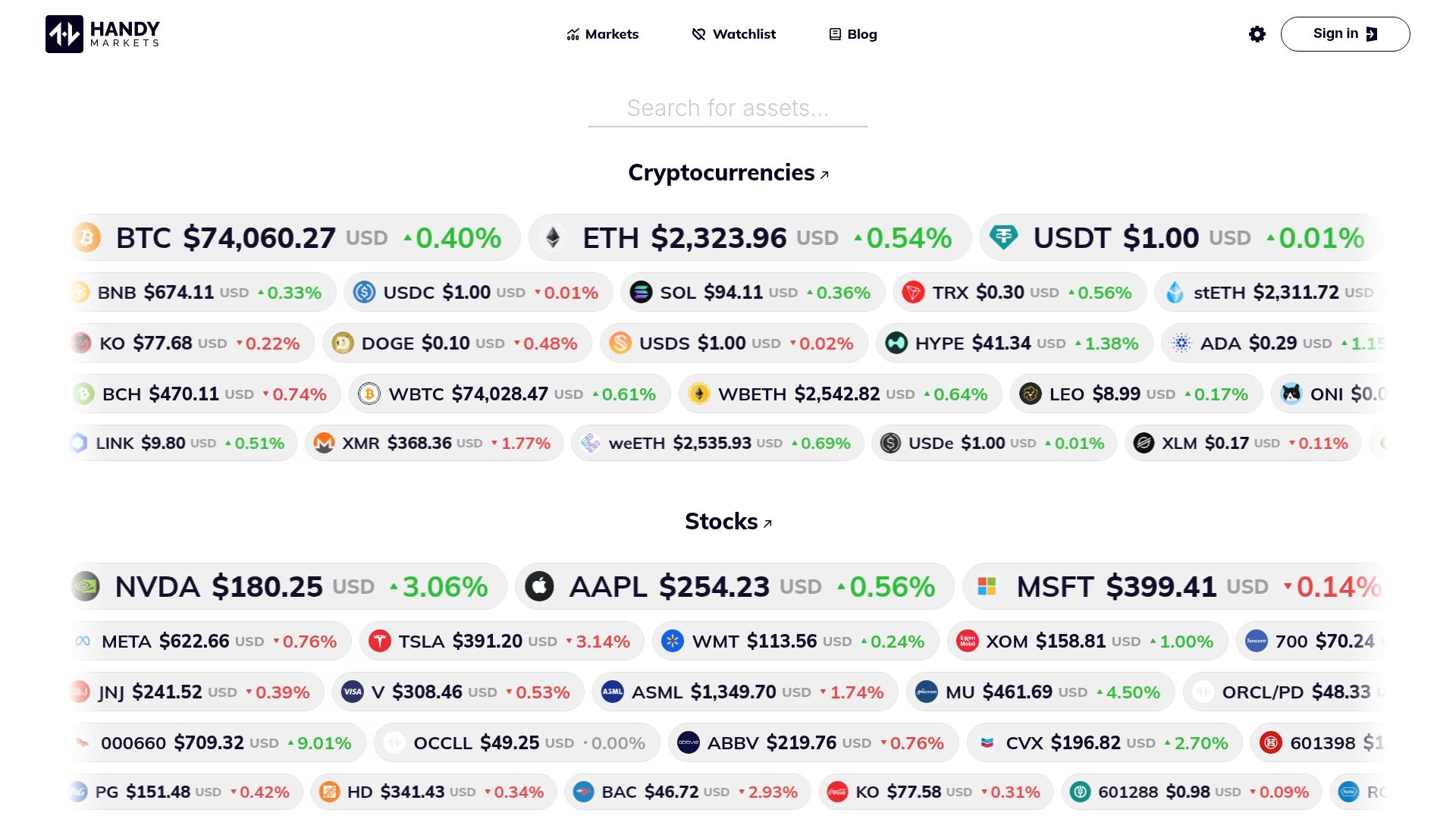
Customizable price alerts ensure you never miss critical market movements that trigger checklist actions. Set notifications via Telegram, Discord, Slack, SMS, Webhook, or Email to receive alerts wherever you work. When Bitcoin drops 5% or your favorite tech stock hits your rebalancing threshold, you know immediately. This responsiveness transforms your checklist from a static document into a dynamic risk management system. Explore comprehensive financial markets tracking, set up stock price alerts, and monitor cryptocurrency price alerts to stay ahead of volatility.
FAQ
What is a market volatility checklist and why is it important?
A market volatility checklist is a structured guide helping you manage risks during turbulent market conditions. It ensures consistent monitoring of portfolio exposures, liquidity positions, and counterparty risks so you make timely decisions protecting your investments. Without a checklist, emotional reactions and missed warning signs lead to preventable losses during volatility spikes.
How can I use volatility forecasts to improve my trading strategy?
Leverage advanced models like TiDE or implied volatility metrics to anticipate market swings before they occur. Adjust your position sizes and hedging strategies based on forecast accuracy rather than reacting after volatility hits. This proactive approach reduces drawdowns and improves risk adjusted returns compared to reactive strategies that only respond to realized volatility.
What liquidity management techniques are vital during market turbulence?
Maintain sufficient cash reserves or liquid assets to cover potential margin calls and seize opportunities when prices dislocate. Regularly review redemption terms and withdrawal processes for fund investments to ensure you can access capital quickly. Assess bid ask spreads and trading volumes for all holdings to identify positions that might trap capital during stress periods.
How often should I update my volatility checklist?
Review and update your checklist quarterly during normal market conditions and weekly during elevated volatility periods. Test the checklist during moderate volatility to identify gaps before you face a crisis. Update trading agreements, counterparty assessments, and leverage limits as your portfolio composition changes or market conditions shift significantly.
What role do governance protocols play in volatility management?
Governance protocols define who has authority to make emergency decisions and what approval processes apply to hedging strategies. Clear protocols prevent paralysis or unauthorized actions when markets move rapidly. Document decision trees, communication schedules, and escalation procedures so your entire team knows exactly how to respond during volatile conditions without confusion or delays.
Recommended
- Mastering Volatility In Investing: A Beginner’s Guide To Navigating Market Swings In 2025 | Handy.Markets
- Financial Markets For Everyone | Handy.Markets
- Articles On Investments | Handy.Markets
- Financial Markets: Track Crypto, Stocks, Forex, Indices, Commodities & ETFs Prices With Alerts | Handy.Markets
- 6 Key Tips for Gold Traders to Grow Portfolio Success