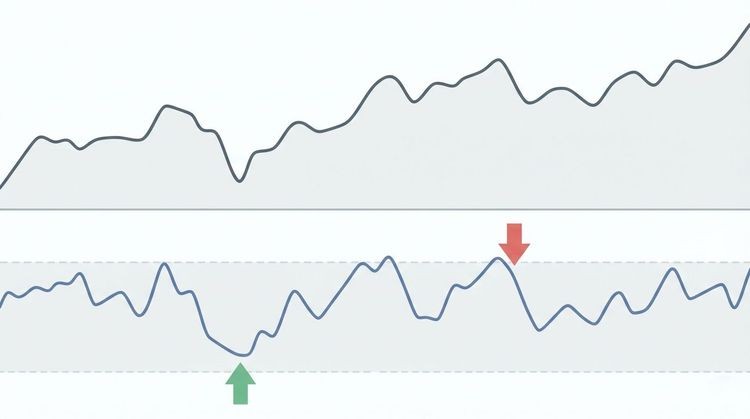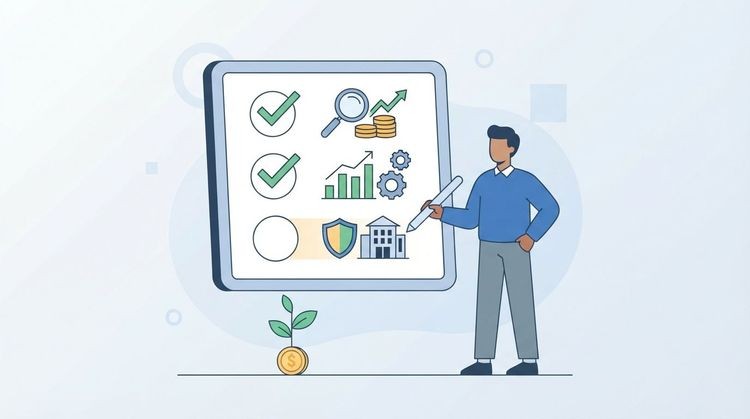

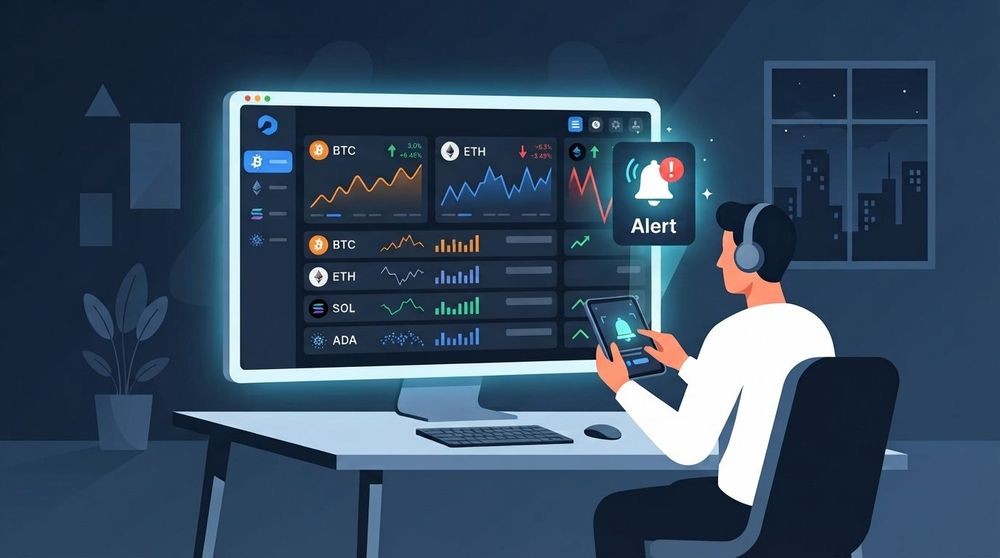
Use a live price aggregator, build a focused watchlist, and turn on at least one reliable alert channel. That combination is how to monitor crypto prices without staring at a screen all day or getting blindsided by a move while you slept.
Here’s the quick-action version:
- Open a dashboard or account on a price-tracking platform.
- Add a small number of assets you actually care about to a watchlist.
- Set one absolute price alert and one percent-change alert on your top holding.
If you want all three steps handled in one place, Handy supports multi-channel alerts, so your notification lands wherever you already check messages, whether that’s Telegram, Slack, or plain email.
Key Takeaways
Reliable crypto price monitoring combines a transparent, multi-exchange data feed with a focused watchlist and alerts delivered through more than one channel.
| Point | Details |
|---|---|
| Pick your data source carefully | Favor trackers that disclose exchange coverage since prices vary by weighting and source. |
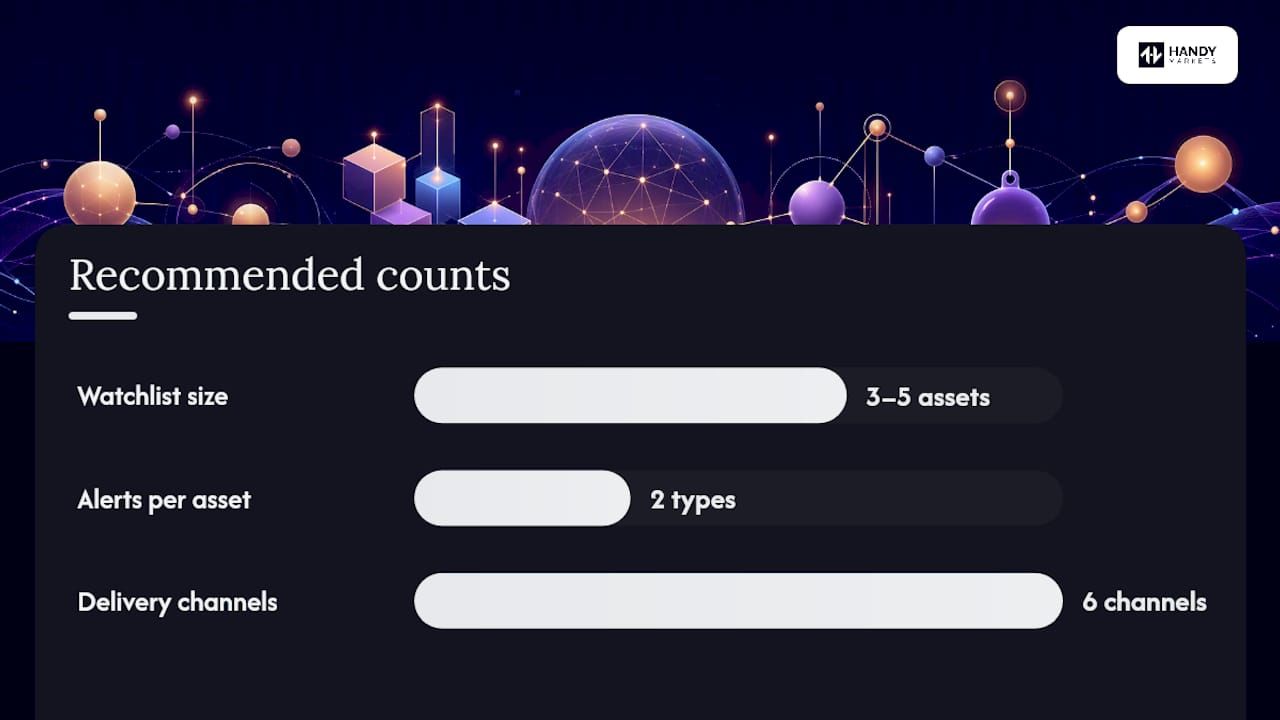
| Build a small watchlist | Track three to five assets so alerts stay meaningful instead of overwhelming your inbox. |
| Set two alert types per asset | Combine an absolute price alert with a percent-change alert to catch both levels and volatility. |
| Verify before large trades | Cross-check prices against your execution venue and check volume before acting on a spike. |
| Use Handy.Markets for multi-channel delivery | Handy.Markets combines live crypto prices, watchlists, and alerts across Telegram, Discord, Slack, SMS, webhook, and email. |
Table of Contents
- How Do Live Crypto Price Trackers Actually Work?
- What Features Should You Look For in a Price Tracker?
- How Do You Set Up Reliable Crypto Price Monitoring?
- How Do You Choose the Right Tracker for Your Needs?
- Web Dashboard, Mobile App, or Webhook: Which Fits Your Routine?
- Why Do Crypto Price Alerts Give False Signals?
- How Does Handy.Markets Cover This Entire Checklist?
- Sources
How Do Live Crypto Price Trackers Actually Work?
A tracker’s ticker number isn’t magic. It’s either pulled from a single exchange’s last trade or aggregated across many exchanges into a volume-weighted average, and that distinction matters more than most beginners realize. There’s no single definitive crypto price at any given moment. Multiple exchanges run independent order books, so two trackers can legitimately show slightly different numbers depending on which exchanges they weigh and how heavily.
Update method matters too. Websocket connections push new data the instant a trade clears, while polling systems check in on a timer, sometimes every few seconds. For fast-moving assets, that gap can mean your alert fires late.
- Websocket feeds: near-instant, better for volatile assets and active alerts.
- Polling feeds: cheaper to run, fine for casual watchlist checks.
- Exchange coverage: fewer sources means more exposure to one exchange’s quirks.
Pro Tip: Before trusting a price spike, glance at order-book depth and 24-hour volume. A thin market can jump 8% on a single small trade, and that’s noise, not a real market move.
What Features Should You Look For in a Price Tracker?
Not every tracker needs a full trading terminal built in, but a handful of features separate the useful ones from the decorative ones. A good tracker shows live prices, market cap, 24-hour volume, watchlists, alerts, and portfolio tools together, because price alone tells you almost nothing about whether a move is significant.
Rank your priorities like this:
- Real-time or low-latency updates — the foundation everything else depends on.
- Watchlists — so you’re not scrolling through thousands of tickers.
- Price and percent-change alerts — the mechanism that actually saves you time.
- Portfolio tracking — aggregate value across your holdings, not just per-coin prices.
- Exchange coverage — broader coverage means fewer surprises.
- Advanced extras — webhook or Telegram delivery, order-book depth, historical charts, multiple base currencies, and API access.
Investopedia’s comparison of tracker platforms found that update frequency and alert delivery options, not brand recognition, are what actually separate one tool from another.
Pro Tip: Test any tracker’s latency on a genuinely volatile coin before paying for a premium tier. If the price lags visibly behind a live exchange chart, no other feature makes up for it.
How Do You Set Up Reliable Crypto Price Monitoring?
The setup itself takes maybe ten minutes once you know the order of operations: create your account, lock it down, add your assets, configure alerts, then test that they actually arrive.
- Create an account and secure it immediately. Turn on two-factor authentication before adding anything else. A price-alert account tied to your email is still a target worth protecting.
- Choose your quote currency. Most trackers default to US dollars, but confirm this if you think in euros, pounds, or another currency.
- Add three to five assets to a watchlist. Resist the urge to track fifty coins on day one; a crowded watchlist buries the alerts that matter.
- Set both an absolute price alert and a percent-change alert on each core holding. A flat $50,000 Bitcoin alert catches a specific level; a 5% move alert catches volatility regardless of price level.
- Enable multi-channel delivery. Push notifications are fine for casual checks, but email or Telegram alerts back them up when your phone is off or on silent.
- Test delivery before you rely on it. Trigger a test alert and confirm it lands in the channel you expect.
Pro Tip: If your tracker supports webhooks, route alerts into a personal spreadsheet, a Discord bot, or a trading script instead of just your inbox. And use debounce or delay settings where available. Without them, a choppy market can fire the same alert a dozen times in an hour, which trains you to ignore the one that actually matters.
How Do You Choose the Right Tracker for Your Needs?
Prioritize data freshness and how alerts get delivered first. Pricing and privacy come second, not because they don’t matter, but because a tracker with stale data or a broken notification pipeline is useless no matter how cheap it is.
Free tiers work fine for casual watchlist checking and occasional threshold alerts. Paying makes sense once you need sub-second feeds, webhook delivery, or alerts across multiple channels at once.
Run through this before committing:
- Does the platform disclose its data sources and update frequency, or is it vague about where prices come from?
- Is two-factor authentication available, and does the platform have a clear data-sharing policy?
- If you trade actively, does the tracker offer any exchange-level price verification, or are you relying purely on aggregated numbers?
- Are there API rate limits that would interfere with how you actually plan to use the service?
Pro Tip: Treat a platform’s transparency about its own limitations, like disclosed latency or listed data sources, as a stronger trust signal than a slick interface.
Web Dashboard, Mobile App, or Webhook: Which Fits Your Routine?
Match the form factor to how you want the alert to reach you. Someone who checks prices twice a day wants a phone notification. Someone automating a trading bot wants a webhook feed straight into their own code.
- Web dashboards: best for deep analysis at a desk, weaker for on-the-go alerts.
- Native mobile apps: best for instant push notifications, limited for complex charting.
- Browser extensions: convenient for passive, in-browser monitoring while working, but easy to overlook if you close the tab.
- API and webhook integrations: best for automation into spreadsheets or bots, but require some setup effort upfront.
| Form Factor | Ease of Use | Latency | Automation Readiness |
|---|---|---|---|
| Web dashboard | High | Moderate | Low |
| Mobile app | High | Low | Low to moderate |
| Browser extension | High | Moderate | Low |
| API / webhook | Moderate | Low | High |
Why Do Crypto Price Alerts Give False Signals?
Most bad alerts trace back to one of three causes: thin liquidity, single-exchange pricing, or a data feed lagging behind the real market.
Common pitfalls include:
- Ticker or ticker-symbol confusion between unrelated tokens sharing a similar name.
- Low-liquidity tokens where a small order swings the displayed price dramatically.
- Wide bid-ask spreads that make the “price” ambiguous depending on whether you’re buying or selling.
- Delayed aggregation, where the number on screen reflects a trade from several seconds or minutes ago.
- Duplicate or fake tokens using near-identical tickers to legitimate projects.
Check market cap and 24-hour volume alongside price before reacting, and favor trackers that openly disclose which exchanges feed their numbers.
Pro Tip: Before executing any large trade, manually cross-check the price on your actual execution venue. Set alert thresholds tied to your strategy, not arbitrary round numbers, and you’ll cut a lot of noise.
How Does Handy.Markets Cover This Entire Checklist?
Handy is built around the exact setup this guide describes: live prices, watchlists, portfolio tracking, and alert delivery across Telegram, Discord, Slack, SMS, webhook, and email.
- Live prices and standard metrics: price, 24-hour change, and market context in one dashboard.
- Watchlists and portfolio tracking: monitor your specific holdings instead of the entire market.
- Multi-channel alerts: Handy lets you route the same alert to Telegram and email simultaneously, so a missed push notification isn’t your only line of defense.
Quick start:
- Create your account and enable two-factor authentication.
- Add your core coins to a watchlist.
- Turn on at least two alert channels.
- Send a test alert through your webhook or preferred channel to confirm delivery.
When Do You Actually Need Active Monitoring Instead of Alerts?
Alerts are enough for portfolio maintenance, rebalancing, and catching major price swings while you’re away from a screen. Active order-book monitoring matters more when you’re placing a large trade or day trading, where execution price depends on depth, not just the headline number.
A practical middle ground: keep a broad set of alerts running as your baseline, and reserve live dashboard monitoring for the handful of assets you actively trade.

Start Monitoring Crypto Prices With Real Alerts Today
You now know exactly how to monitor crypto prices: a live aggregator, a tight watchlist, and alerts that actually reach you. Handy pulls all three into one dashboard, with the added advantage of sending alerts to whichever channel you actually check, rather than forcing you into a single app’s notification system.
That matters most when a price move happens overnight or during a meeting you can’t step out of. Set up your first alert on Handy now, add two or three coins to a watchlist, and send a test notification through Telegram or webhook to confirm it reaches you before you need it.
Sources
- How To Track Crypto Prices: Beginner Guide to Alerts, Charts, Apps, and Portfolio Tracking - Be Coin Collector
- Cryptocurrency Prices Live for Beginners: What to Know — Kalena
- A Comparison of Cryptocurrency Price Trackers - Investopedia
This article is general information, not a substitute for advice from a qualified financial advisor. Consult a qualified financial professional about your own circumstances before acting on anything here.