


Separating lasting market trends from short-lived noise has always been hard, but 2026 adds a fresh layer of complexity. Elevated valuations, shifting sector leadership, and a macro environment still digesting rate cycles make this year particularly demanding for traders and investors. The Cyclically Adjusted Price-to-Earnings ratio, or CAPE, sits at historically high levels, and market breadth signals suggest wider participation than the narrow tech rallies of recent years. We built this guide to give you a clear, data-backed framework for reading the trends that actually matter right now.
Table of Contents
- How to evaluate stock market trends in 2026
- 1. Valuations stay high: CAPE and future returns
- 2. Market breadth: From narrow tech rallies to wider participation
- 3. Sector trends: Leaders and laggards for 2026
- 4. Macro and global factors influencing 2026 trends
- Comparing 2026’s top stock market trends
- Bring real-time 2026 market insights to your investing
- Frequently asked questions
Key Takeaways
| Point | Details |
|---|---|
| High valuation risk | Current CAPE ratios suggest investors should expect modest long-term returns and adjust risk exposure. |
| Market breadth shift | Wider sector participation marks a healthier market tone than last year’s narrow rallies. |
| Sector rotation matters | Leadership is rotating among sectors, highlighting the need for a flexible and diversified trading strategy. |
| Macro forces drive | Watch inflation, rates, and global events as crucial determinants of stock directions in 2026. |
How to evaluate stock market trends in 2026
Now that we’ve set the stakes for market vigilance in 2026, let’s establish the critical criteria investors should use before zeroing in on specific trends. Not every price move deserves your attention. The best traders filter signals through a consistent set of lenses, and in 2026, those lenses matter more than ever.
Here are the four core factors worth applying to any trend you’re tracking:
- Valuation — Is the trend supported by reasonable pricing, or is it riding momentum alone? High CAPE readings warn us that empirical benchmarks point to muted 10-year forward returns after periods of elevated valuations and healthy breadth.
- Sector leadership — Which sectors are driving gains? Leadership rotation tells you whether a rally is sustainable or concentrated in a handful of names. Tracking key market indicators helps you spot these shifts early.
- Market breadth — Are gains spreading across many stocks, or are a few giants carrying the index? Breadth is the pulse of a healthy rally.
- Macro environment — Interest rates, inflation, and policy signals shape the backdrop for every sector. Ignoring macro in 2026 is like sailing without checking the weather.
Even experienced traders fall into confirmation bias, latching onto trends that match their existing positions. Reviewing market data trends in 2026 through multiple lenses reduces that risk.
Pro Tip: Use equal-weighted indices alongside cap-weighted ones. Equal-weighted versions give you a truer read on market breadth because they don’t let a few mega-cap stocks distort the picture.
1. Valuations stay high: CAPE and future returns
With our evaluation framework in mind, let’s dig into the most significant trend: persistently high valuations and their impact. The CAPE ratio compares current stock prices to average inflation-adjusted earnings over the past 10 years. When CAPE is high, history suggests the market is pricing in a lot of optimism.

Right now, CAPE sits well above its long-run average of roughly 17. Post-high CAPE periods have historically delivered forward 10-year annualized returns in the range of 4 to 5%, compared to the 10%+ returns seen after low-CAPE environments. That’s not a reason to panic, but it is a reason to recalibrate expectations.
| CAPE level | Historical 10-yr forward return (annualized) |
|---|---|
| Below 15 | ~10-12% |
| 15 to 25 | ~7-9% |
| Above 30 | ~4-5% |
What does this mean for your strategy? It means that simply buying and holding a broad index may deliver less firepower than it did in prior decades. Strategies focused on maximizing returns in 2026 need to account for this reality by leaning into quality, dividends, and selective sector exposure. Pairing that with solid volatility strategies helps you stay positioned without taking on unnecessary risk.
Key stat: After CAPE readings above 30, forward 10-year returns average just 4 to 5% annually. That’s roughly half the long-run market average.
2. Market breadth: From narrow tech rallies to wider participation
Valuation is only part of the picture; understanding where participation is growing can reveal much about the market’s underlying strength. For the past several years, a handful of mega-cap technology companies carried the bulk of index gains. In 2026, that story is changing.
Equal-weight breadth signals a healthier market than narrow large-cap tech rallies alone. When more stocks participate in a rally, it suggests broader economic confidence rather than speculative concentration.
| Market type | Characteristics | Risk level |
|---|---|---|
| Narrow rally (few leaders) | High concentration, fragile if leaders stumble | Higher |
| Broad rally (wide participation) | Distributed gains, more resilient | Lower |
Here’s a quick breakdown of the pros and cons of each:
Broad market rallies:
- Pros: More resilient to single-stock shocks, reflects genuine economic strength, supports long-term bull markets
- Cons: Individual sector outperformance is harder to capture, gains may feel slower
Narrow market rallies:
- Pros: Concentrated positions in leaders can generate outsized short-term gains
- Cons: Vulnerable to sharp reversals if a few key names disappoint
“Breadth is the market’s way of voting. When more stocks join the rally, the market is telling you the optimism is real, not just a story told by a few giants.”
Monitoring market breadth indicators and real-time market data gives you the clearest view of whether today’s gains are built on solid ground.
3. Sector trends: Leaders and laggards for 2026
Now that we’ve covered overall market participation, let’s break down specific sector trends shaping strategies in 2026. The headline story is that diversified sector momentum defines this year, not just tech outperformance. That shift opens up opportunities across the board.
Sector leaders in 2026:
- Energy — Benefiting from supply constraints and sustained demand, energy stocks have shown strong relative performance.
- Industrials — Infrastructure spending and reshoring trends continue to drive earnings growth.
- Financials — A stabilizing rate environment has improved margins for banks and insurers.
- Healthcare — Aging demographics and innovation in biotech keep this sector in focus.
Sector laggards in 2026:
- Consumer discretionary — Squeezed by persistent inflation and cautious consumer spending.
- Real estate — Still adjusting to higher-for-longer rate expectations.
- Communication services — Advertising revenue headwinds and regulatory scrutiny weigh on growth.
The drivers behind these moves are not random. Energy and industrials benefit from structural tailwinds, while rate-sensitive sectors like real estate face ongoing pressure. Reviewing 2026 sector strategies and market trends strategy can help you position around these dynamics.
Pro Tip: Don’t write off defensive sectors like utilities and consumer staples. Late-cycle environments often produce surprise outperformance from these areas, especially when growth expectations get trimmed.
4. Macro and global factors influencing 2026 trends
Broader sector moves are heavily shaped by macroeconomic conditions and global forces, and here’s what stands out this year. The macro backdrop in 2026 is not chaotic, but it is nuanced. Several forces are pulling in different directions, and knowing which ones carry the most weight helps you stay oriented.
Here are the top macro factors to watch:
- Interest rates — Central banks have moved toward a cautious easing cycle, but rates remain elevated relative to pre-2022 norms. Rates and policy actions remain central to equity strategy formation in 2026.
- Inflation — Core inflation has moderated but not fully normalized. Sticky services inflation continues to influence Fed decisions and corporate margins.
- Global growth divergence — The US economy is outpacing Europe and parts of Asia, creating currency and earnings dynamics that affect multinational companies.
- Geopolitical risk — Ongoing tensions in key regions add a layer of uncertainty to energy prices and supply chains, which ripples into equity markets.
- Policy and regulation — Tax policy, trade tariffs, and sector-specific regulation are active variables that can shift sector leadership quickly.
Key stat: Consensus projections for 2026 global GDP growth sit near 3.1%, with the US tracking above that at roughly 2.4%. That gap matters for currency-sensitive portfolios.
Using a volatility checklist alongside broader trend analysis keeps you from being blindsided when macro conditions shift.
Comparing 2026’s top stock market trends
With each major trend unpacked, let’s compare them directly to sharpen your 2026 investment decisions. The table below puts the four key trends side by side so you can weigh their significance, predictability, and how actionable each one is for your portfolio.
| Trend | Significance | Predictability | Actionability |
|---|---|---|---|
| High CAPE valuations | Very high | Moderate | Adjust return expectations, favor quality |
| Broader market breadth | High | Moderate | Diversify beyond mega-cap tech |
| Sector rotation | High | Lower | Monitor leaders, watch defensive sectors |
| Macro and global forces | Very high | Lower | Use alerts, stay nimble on rate moves |
Current breadth signals and high CAPE together define 2026’s unique profile. No single trend tells the whole story. The smartest approach combines all four into a layered view of the market.
Here are the key takeaways for building these trends into your strategy:
- Recalibrate return expectations — A 4 to 5% annualized return environment calls for more selective stock picking and income-generating strategies.
- Embrace diversification — Broader breadth rewards investors who spread exposure across sectors rather than concentrating in a few names.
- Stay sector-aware — Rotate toward leaders with structural tailwinds and keep an eye on late-cycle defensive plays.
- Monitor macro signals closely — Rate decisions and geopolitical events can move markets fast. Real-time data is not optional; it’s essential.
Reviewing the market trends guide regularly keeps your framework current as conditions evolve through the year.
Bring real-time 2026 market insights to your investing
Translating knowledge on 2026’s key trends into action is easier with the right data and tools at your fingertips. Understanding CAPE ratios, breadth signals, and sector rotations is valuable, but acting on them requires live, accurate market data delivered when it matters most.
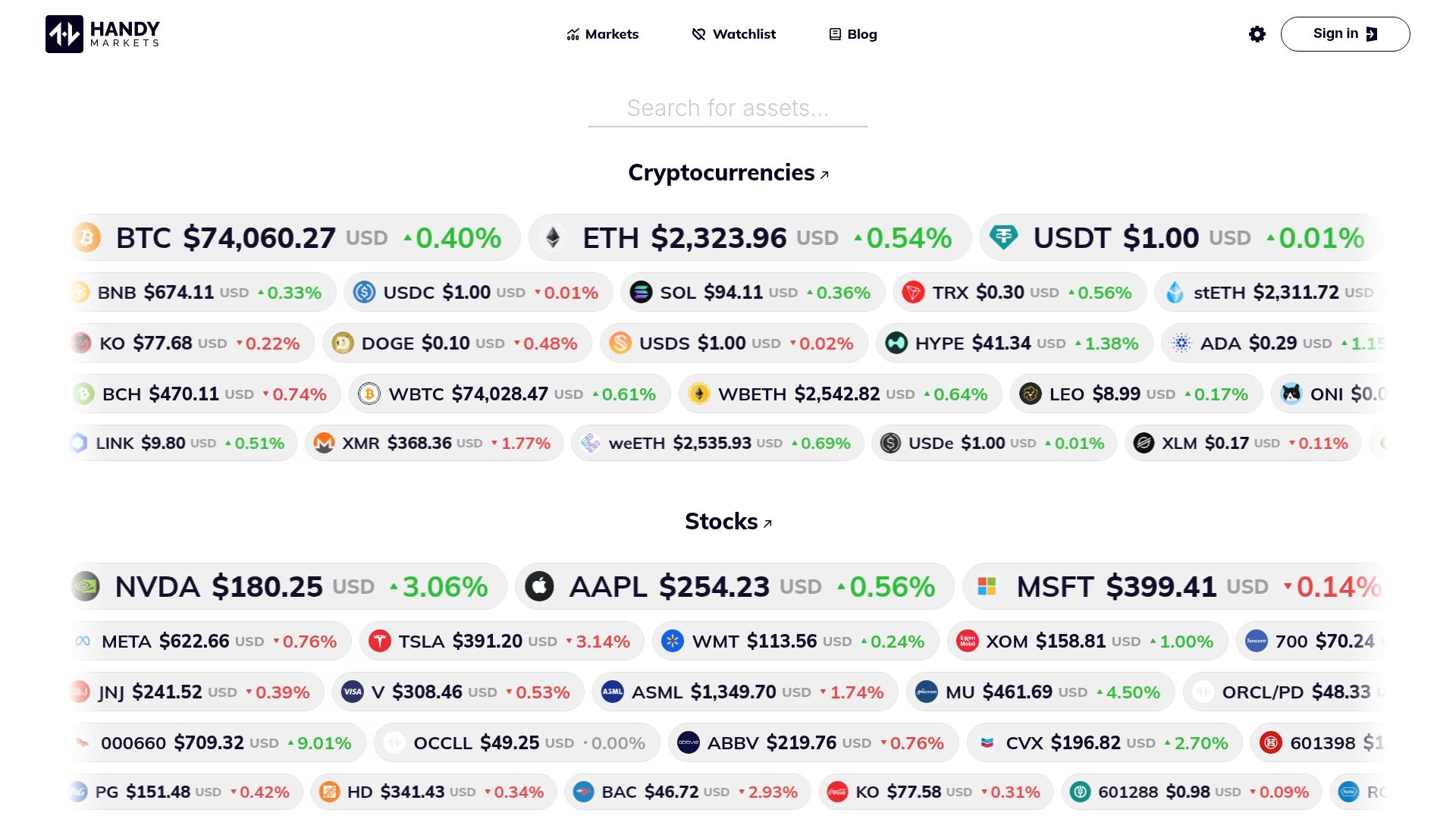
At Handy.markets, we make it straightforward to track financial markets across stocks, commodities, indices, and more, all in one place. You can monitor live stock quotes for the sectors and names you care about, and set price alerts across Telegram, Discord, Slack, SMS, Email, and Webhook so you never miss a critical move. Whether you’re watching for a CAPE-driven correction or a sector breakout, having real-time signals means you can respond with confidence rather than scrambling to catch up. Set up your personalized market view today and stay ahead of 2026’s shifting landscape.
FAQ
What is the CAPE ratio and why does it matter in 2026?
The CAPE ratio measures stock prices against 10-year average inflation-adjusted earnings, and high CAPE levels in 2026 signal that future returns are likely to be more modest than historical averages. It’s one of the most reliable long-term valuation tools available to investors.
How can traders spot genuine stock market trends in 2026?
By evaluating market breadth, sector leadership, valuations, and macro signals together, traders can filter noise and focus on durable trends. Empirical benchmarks and breadth signals provide a data-driven foundation for that process.
Are technology stocks still leading the market this year?
Tech remains influential, but diversified sector momentum in 2026 means energy, industrials, and financials are contributing meaningfully to market gains alongside it.
What macroeconomic risks should I watch for in 2026?
Rates and policy changes are the most immediate risks, alongside inflation persistence and geopolitical events that can disrupt energy prices and supply chains without warning.