
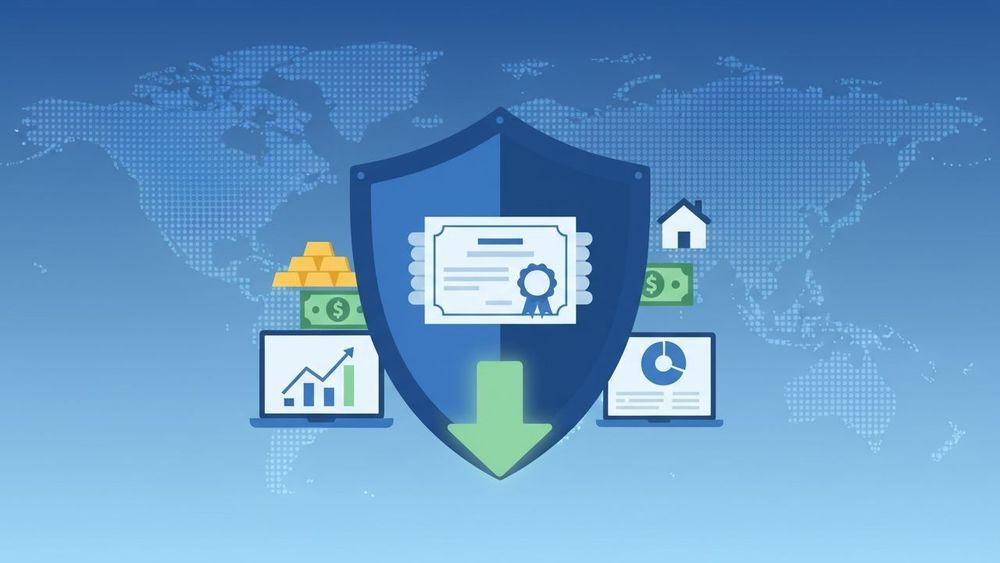
Unlike stock market where volatility can feel like a rollercoaster ride, bonds offer a more grounded approach to building wealth. For beginners stepping into the world of investing in 2025 - 2026, bonds stand out as a reliable option, providing steady income and a buffer against economic turbulence. Whether you're saving for retirement, a home down payment, or simply diversifying beyond high-risk assets like cryptocurrencies or stocks, understanding bonds can empower you to make smarter financial decisions. This comprehensive guide dives deep into everything you need to know about bonds- from the basics to advanced strategies- helping you navigate this safe investing avenue with confidence.
As interest rates stabilize around 4-5% in 2025, bonds are experiencing a resurgence, attracting novice investors seeking predictable returns amid global uncertainties like trade policies and inflation pressures. Unlike the flashy allure of tech stocks, bonds emphasize preservation and consistency, making them an ideal starting point for those new to the game.
What Are Bonds? Breaking Down the Fundamentals
At their core, bonds are essentially IOUs issued by governments, corporations, or municipalities to raise capital. When you buy a bond, you're lending money to the issuer in exchange for regular interest payments (known as coupons) and the return of your principal amount at maturity. Think of it as a loan where you're the bank—reliable and low-drama.
Bonds differ from stocks in key ways: while stocks represent ownership in a company with potential for dividends and growth, bonds are debt instruments focused on fixed income. Their value fluctuates based on interest rates, credit quality, and time to maturity, but they generally offer lower risk. For beginners, this predictability is golden; historical data shows bonds have averaged 3-5% annual returns, often outpacing inflation without the wild swings of equities.
Key terms every beginner should know:
- Face Value (Par Value): The amount the bond will be worth at maturity, typically $1,000.
- Coupon Rate: The annual interest rate paid to bondholders.
- Yield: The effective return, which can differ from the coupon rate based on market price.
- Maturity Date: When the principal is repaid.
In 2025, with the 10-year U.S. Treasury yield hovering around 4.24-4.38%, bonds provide a compelling entry point for conservative investors.
Types of Bonds: Which One Fits Your Beginner Portfolio?
Bonds aren't one-size-fits-all; they come in various flavors, each with unique features tailored to different risk appetites and goals. As a beginner, starting with safer options like Treasuries can build your confidence before exploring higher-yield varieties.
1. U.S. Treasury Bonds
Issued by the federal government, these are the gold standard for safety- backed by the \"full faith and credit\" of the U.S. They include Treasury bills (short-term, under a year), notes (2-10 years), and bonds (over 10 years).
- Pros: Virtually risk-free from default; exempt from state and local taxes; highly liquid.
- Cons: Lower yields compared to corporate bonds; vulnerable to interest rate changes.
- Best for Beginners: Ideal for preserving capital. Current 10-year yields sit at about 4.26% as of late August 2025.
2. Corporate Bonds
These are issued by companies to fund operations or expansions. They range from investment-grade (safer, like those from blue-chip firms) to high-yield (junk bonds from riskier issuers).
- Pros: Higher yields than Treasuries (often 5-7% in 2025); potential for capital gains if rates fall.
- Cons: Credit risk- if the company falters, payments could stop; less liquid than Treasuries.
- Best for Beginners: Stick to investment-grade for stability. For example, AAA-rated corporates offer yields around 4.5-5%.
3. Municipal Bonds (Munis)
Issued by states, cities, or local entities for public projects like schools or roads.
- Pros: Tax-exempt interest (federal, and often state/local); relatively safe with low default rates.
- Cons: Lower yields (3-4% typically); call risk (issuer may repay early).
- Best for Beginners: Great for higher tax brackets; yields on long-term munis edged up slightly in 2025 due to infrastructure spending.
4. Inflation-Protected Bonds (TIPS and I Bonds)
Treasury Inflation-Protected Securities (TIPS) and Series I Savings Bonds adjust for inflation.
- Pros: Protect against rising prices; I Bonds currently yield 3.98% composite rate through October 2025.
- Cons: Lower base yields; deflation could reduce returns.
- Best for Beginners: Excellent in inflationary environments like post-2024 recovery.
5. International and Emerging Market Bonds
Bonds from foreign governments or companies, offering diversification.
- Pros: Higher potential yields; exposure to global growth.
- Cons: Currency risk, political instability; higher volatility.
- Best for Beginners: Approach cautiously- perhaps via ETFs.
| Type of Bond | Average Yield (2025) | Risk Level | Tax Advantages | Ideal For |
|---|---|---|---|---|
| Treasury | 4-4.5% | Low | State/Local Exempt | Safety-First Investors |
| Corporate | 4.5-7% | Medium-High | None | Income Seekers |
| Municipal | 3-4% | Low-Medium | Tax-Exempt | High-Tax Bracket |
| TIPS/I Bonds | 3-4% (inflation-adjusted) | Low | Varies | Inflation Protection |
| International | 5-8% | High | None | Diversification |
This table highlights why bonds suit beginners: options for every comfort level.
How Do Bonds Work? A Step-by-Step Explanation
Bonds generate returns through interest payments and potential price appreciation. When interest rates fall, existing bonds with higher coupons become more valuable, allowing you to sell at a premium. Conversely, rising rates can depress prices.
For example, if you buy a $1,000 bond with a 4% coupon, you'll receive $40 annually until maturity. In 2025, with rates cooling from 2024 highs, bond prices have stabilized, making it a buyer's market. Yield curves, like the U.S. Treasury's, show short-term yields at 3.88% for two-years versus 4.38% for ten-years, indicating a steepening curve favorable for long-term holds.
Pros and Cons of Investing in Bonds for Beginners
Advantages
- Safety and Stability: Lower volatility than stocks; diversification tool with low correlation to equities.
- Predictable Income: Regular coupons provide steady cash flow, perfect for retirees or conservative portfolios.
- Tax Benefits: Munis and Treasuries offer advantages, boosting effective returns.
- Accessibility: Start with as little as $25 via bond funds or ETFs.
- Inflation Hedge: Options like TIPS safeguard purchasing power.
Disadvantages
- Lower Returns: Typically 3-5% vs. stocks' 7-10% historical averages.
- Interest Rate Risk: Prices fall when rates rise, as seen in early 2025 volatility.
- Inflation Erosion: Fixed coupons can lose value if prices soar.
- Credit and Liquidity Risks: Non-Treasury bonds carry default potential; harder to sell quickly.
- Opportunity Cost: In bull markets, bonds may underperform growth assets.
Overall, for beginners, the pros outweigh cons when used for balance- aim for 40-60% bonds in a starter portfolio.
How to Invest in Bonds as a Beginner: A Practical Guide
Starting is simpler than you think. Follow these steps:
- Assess Your Goals and Risk Tolerance: Use online calculators to determine bond allocation.
- Educate Yourself: Read resources like Vanguard's bond basics or NerdWallet's guides.
- Choose Your Method:
- Direct Purchase: Buy Treasuries at TreasuryDirect.gov; no fees.
- Bond Funds/ETFs: Easiest for beginners- options like Vanguard's BND ETF track broad indexes with low costs (0.03% expense ratio).
- Brokers: Platforms like Fidelity or Charles Schwab offer commission-free trades.
- Build a Ladder: Buy bonds with staggered maturities to manage rate risk.
- Monitor and Rebalance: Use apps for price alerts; review annually.
- Consider Taxes: Roth IRAs or 401(k)s maximize benefits.
In 2025, digital platforms make investing seamless- start with $100 in a bond ETF for instant diversification.
Risks in Bond Investing and How to Manage Them
No investment is foolproof. Key risks include:
- Interest Rate Risk: Mitigate with short-term bonds or ladders.
- Credit Risk: Stick to high-rated issuers (AAA/AA).
- Inflation Risk: Opt for TIPS.
- Liquidity Risk: Favor ETFs over individual bonds.
- Call Risk: Avoid callable bonds if possible.
Diversification and patience are your allies- bonds shone during 2022's market dip, proving their defensive value.
Bond Market Trends in 2025: What Beginners Should Watch
With U.S. yields in the 4-5% range, bonds are poised for solid performance if rates ease further amid economic cooling. Emerging trends include sustainable bonds (green bonds) and tokenized assets on blockchain for easier access. Municipal issuance is up due to infrastructure bills, while corporate bonds benefit from strong balance sheets. Keep an eye on Fed policies-rate cuts could boost prices.
FAQs:
Are bonds a good investment in 2025?
Yes, with yields near multi-year highs, they offer attractive income amid stock uncertainty.
How much money do I need to start investing in bonds?
As little as $25 via ETFs or I Bonds.
What's the difference between bonds and bond funds?
Individual bonds give control over maturity; funds provide diversification and liquidity.
Can beginners lose money on bonds?
Yes, via price drops or defaults, but Treasuries are safest.
How do I track bond prices?
Use tools like handy.markets for real-time alerts on yields and events.
Conclusion: Why Bonds Are Your Safe Haven in Investing
For beginners in 2025, bonds aren't just safe- they're smart. By offering stability, income, and diversification, they form the backbone of a resilient portfolio. Start small, learn as you go, and leverage user-friendly platforms to monitor trends. Whether through Treasuries for peace of mind or corporates for extra yield, bonds empower you to invest wisely without the stress. Dive in today, and watch your financial future solidify.